
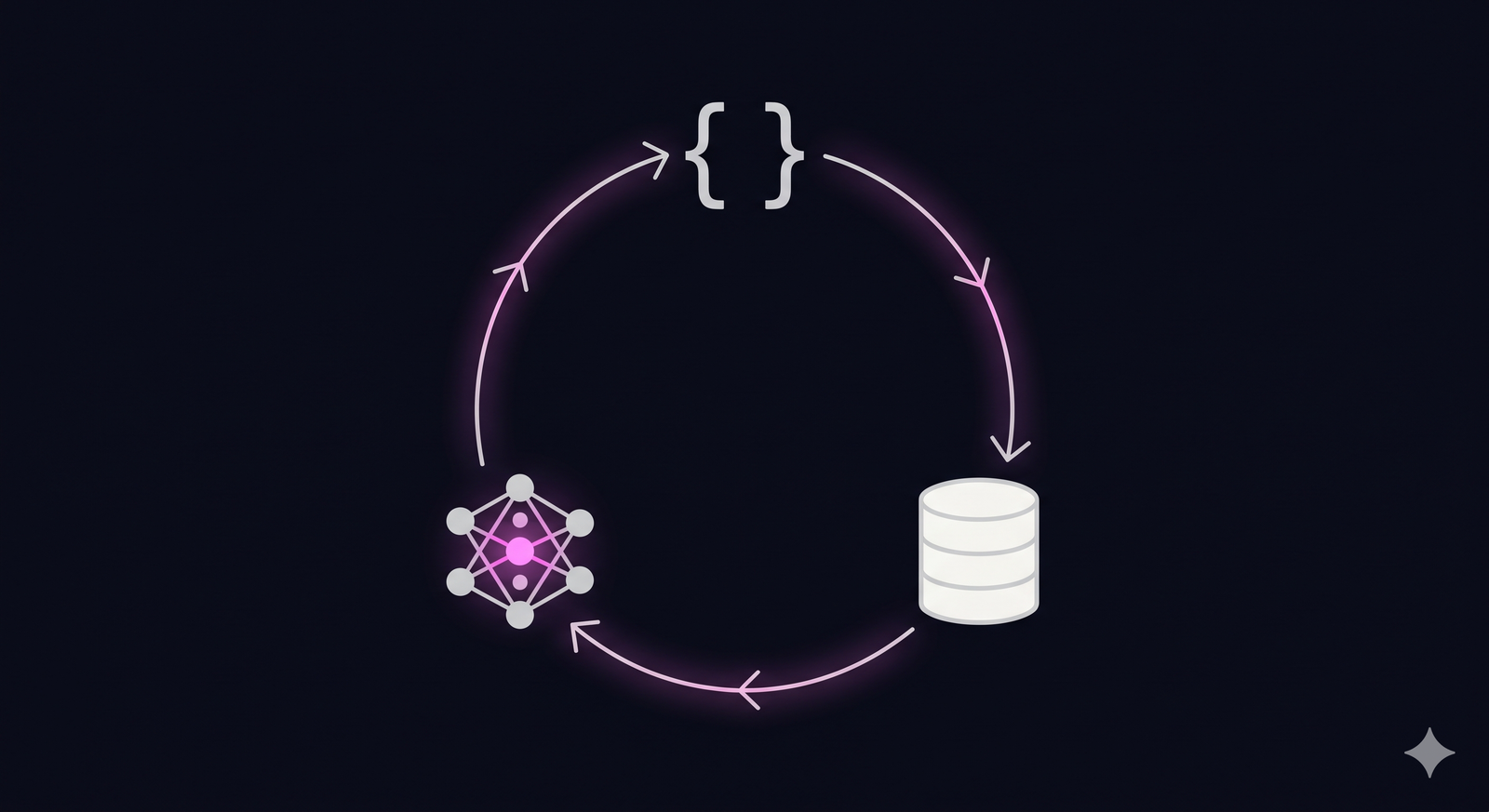
Continuous Integration and Continuous Deployment (CI/CD) for machine learning automates the testing, building, and launching of AI models into production. Specifically, this methodology ensures that newly trained models, code updates, and fresh datasets are mathematically validated before interacting with real users. Ultimately, CI/CD for ML reduces severe deployment bottlenecks and prevents degraded models from breaking critical enterprise applications.
The Staggering Cost of Manual AI Deployment
Building a machine learning model is only the first step. Unfortunately, deploying that model into a live environment remains a massive hurdle for most organizations. According to broad industry data, approximately 55% of all machine learning models never make it to production environments. Furthermore, without automated pipelines firmly in place, deploying a single model takes an average of nine months for traditional engineering teams.
Therefore, companies waste millions of dollars on data science experiments that never generate real business value. When data scientists manually hand off predictive models to software engineers, friction inevitably occurs. Consequently, environments mismatch, software dependencies break, and model performance drops significantly. To solve this problem permanently, engineering teams must implement robust CI/CD practices specifically tailored for the complete machine learning lifecycle.
How ML CI/CD Differs from Traditional Software
Traditional CI/CD focuses purely on testing application code. If the code passes predetermined unit tests, the system confidently deploys it. However, machine learning introduces two highly volatile, unpredictable variables: data and model artifacts.
Firstly, live data constantly changes. Real-world user behavior shifts continuously, causing data distributions to drift over time. Secondly, model architectures require extensive hyperparameter tuning and massive computational resources to build effectively. Therefore, an ML CI/CD pipeline must test the underlying code, validate the incoming dataset, and evaluate the statistical performance of the generated model. If you are building extensive custom AI development projects, ignoring these three pillars will undoubtedly result in catastrophic system failures. You can read more about foundational MLOps differences in Google Cloud’s MLOps architecture guide.
Step-by-Step Best Practices for ML Pipelines
To successfully deploy models at scale, you must architect a delivery pipeline that fully accounts for the unique complexities of artificial intelligence. Here are the foundational steps to follow.
Step 1: Version Control Code, Data, and Models
Software engineers instinctively version control their code using tools like Git. However, AI engineers must also strictly version control datasets and model weights. Tools such as Data Version Control (DVC) allow you to track exactly which dataset trained which specific model iteration. Consequently, if a newly deployed NLP sentiment analysis model starts failing in production, you can instantly roll back to the exact code, data, and model state from the previous week.
Step 2: Automate Data Validation and Testing
Before model training begins, your CI pipeline must automatically validate the incoming data stream. Data pipelines frequently break due to sudden schema changes or unexpected missing values. Therefore, you should implement strict data contracts across your infrastructure. Using testing frameworks like Great Expectations, you can reliably assert that numerical values fall within expected ranges and that categorical features securely match predefined lists. This strict validation absolutely prevents garbage data from corrupting your complex data analytics models and wasting expensive GPU compute time.
Step 3: Implement Continuous Model Evaluation
Training a model successfully does not necessarily mean it is ready for public deployment. Your CI pipeline must automatically evaluate the model against a static, holdout validation dataset. Specifically, the automated system must definitively check if the new model’s accuracy, F1 score, or precision exceeds a pre-defined historical baseline. If the new model performs worse than the currently deployed version, the pipeline must automatically halt the deployment process and alert the engineering team.
Step 4: Execute Shadow Deployments
When a model ultimately passes all automated offline tests, you should not blindly replace the live production model. Instead, utilize shadow deployments. A shadow deployment carefully routes live user traffic to both the old model and the new model simultaneously. However, the system only returns the old model’s prediction to the user. Meanwhile, the system silently logs the new model’s predictions in the background. Consequently, engineers can compare how the new model performs on real-world data without ever risking the actual user experience.
The Crucial Role of Model Registries
Between the Continuous Integration phase and the Continuous Deployment phase, an AI system deeply needs a secure staging area. This is precisely where the Model Registry comes into play. A model registry acts as a centralized, highly structured repository specifically built for machine learning assets.
When your CI pipeline successfully trains a new model and validates its accuracy, it does not immediately push the model to the live servers. Instead, the pipeline intelligently packages the model alongside its required dependencies and securely stores it in the model registry. The registry meticulously logs the model’s metadata, including the training hyperparameter configurations, the specific dataset version used, and the final evaluation metrics. Consequently, operations teams can easily review the model’s entire history before approving it for production rollout.
Furthermore, model registries drastically simplify the rollback process. If a newly deployed model exhibits unexpected behavior in the real world, the CD pipeline can instantly fetch the previous, stable version directly from the registry and swap it back into production with practically zero downtime.
Infrastructure as Code for Machine Learning
Managing the servers and compute clusters that train AI models is notoriously difficult. Therefore, your CI/CD strategy must actively include Infrastructure as Code (IaC). IaC directly allows you to define your entire machine learning environment utilizing simple configuration files.
For example, when a pipeline triggers a new training job, tools like Terraform can automatically spin up a Kubernetes cluster with the exact number of required GPUs. Once the training completely finishes, the pipeline automatically tears down the expensive GPU instances. This methodology ensures environments remain perfectly consistent across development, staging, and production. Furthermore, it aggressively reduces cloud computing costs.
Summary of CI/CD Architectural Differences
To quickly grasp how ML pipelines strictly diverge from standard software development, review the summary table below. Software developers and data scientists alike find these distinct concepts crucial for proper system architecture.
| Feature | Traditional CI/CD | Machine Learning CI/CD |
| Primary Assets | Application Code | Code, Data, and Model Weights |
| Trigger for CI | Code commit (e.g., Pull Request) | Code commit, new data arrival, or performance decay |
| Testing Focus | Unit tests, integration tests | Data validation, statistical model evaluation, bias checks |
| Deployment Output | Executable binary or web container | Trained model API endpoint or inference container |
| Monitoring Metric | CPU usage, memory, latency | Data drift, concept drift, prediction accuracy degradation |
Case Study in Automated AI Deployment
To understand the practical impact, closely examine a typical deployment scenario for a computer vision system used in heavy manufacturing. A factory utilizes a neural network model to detect microscopic product defects on a fast-moving assembly line. Initially, the data science team updated the model manually every six months. This tedious manual process required three full weeks of operational downtime, manual data transfers, and extensive cross-team coordination.
By thoughtfully implementing an automated CI/CD pipeline, the factory entirely transformed its workflow. First, they configured edge devices to automatically send images of misclassified defects back to a secure central server. Next, whenever the database accumulated one thousand new defect images, the CI system automatically triggered a retraining job. The pipeline instantly validated the image data, retrained the object detection model, and tested it against a golden baseline dataset. Finally, the CD system deployed the freshly updated model container back to the edge devices via an over-the-air network update. Consequently, deployment time dropped massively from three weeks to just four hours. Furthermore, this frequent retraining drastically improved the overall defect detection rates.
Handling Concept Drift in Production
Deploying the model is only half the battle. Once live, predictive models inevitably degrade over time. This phenomenon, widely known as concept drift, happens when the underlying relationship between inputs and outputs fundamentally changes in the real world. For example, consumer purchasing habits shift drastically during a global economic recession, rendering older predictive models completely obsolete.
Therefore, your Continuous Deployment strategy must inherently include Continuous Monitoring. You must set up automated alerts that trigger immediately when the statistical distribution of live inference data diverges significantly from the original training data. If your system detects drift, it should automatically trigger the CI pipeline to retrain the model on fresh, recently gathered data. For instance, if you actively operate a public AI image detector, you must constantly retrain your models because generative AI tools update their underlying algorithms rapidly, fundamentally shifting the baseline visual data.
Security and Governance in ML CI/CD
Security remains a highly critical component of any enterprise deployment pipeline. Machine learning models are heavily susceptible to adversarial attacks and malicious data poisoning. If a malicious actor subtly injects manipulated data into your automated retraining pipeline, they can silently compromise the entire AI system. Therefore, your automated tests must absolutely include rigorous security scans and data sanitization steps.
Furthermore, corporate governance dictates that every single production deployment must have a clear, easily accessible audit trail. If an algorithm makes a biased or legally problematic decision, auditors will demand to know exactly what data originally trained that specific model version. By enforcing strict CI/CD pipelines alongside a model registry, you automatically generate a transparent lineage for every single model operating in production. If you need assistance building compliant, secure pipelines, our AI consulting strategy services provide clear architectural blueprints for strict enterprise governance.
Actionable Next Steps
Transitioning to automated machine learning deployments requires upfront engineering effort, but the long-term return on investment is massive. To strictly improve your operational pipelines today, immediately implement these three actionable steps.
- Audit your current deployment workflow to honestly identify the most time-consuming manual bottleneck, whether that is data extraction, environment configuration, or model validation.
- Introduce a robust data versioning tool into your technology stack to explicitly ensure your engineering team can reliably reproduce every historical model training run.
- Establish a baseline statistical performance metric for your live models and actively configure an automated monitoring alert that triggers immediately if real-time accuracy drops below that specified threshold.
If you fundamentally need custom help implementing these complex CI/CD pipelines for your machine learning projects, our AI and Data Science agency can expertly assist you. We purposefully build reliable, automated infrastructure that scales seamlessly. Contact our engineering team today at https://tensour.com/contact.
Leave a Reply