
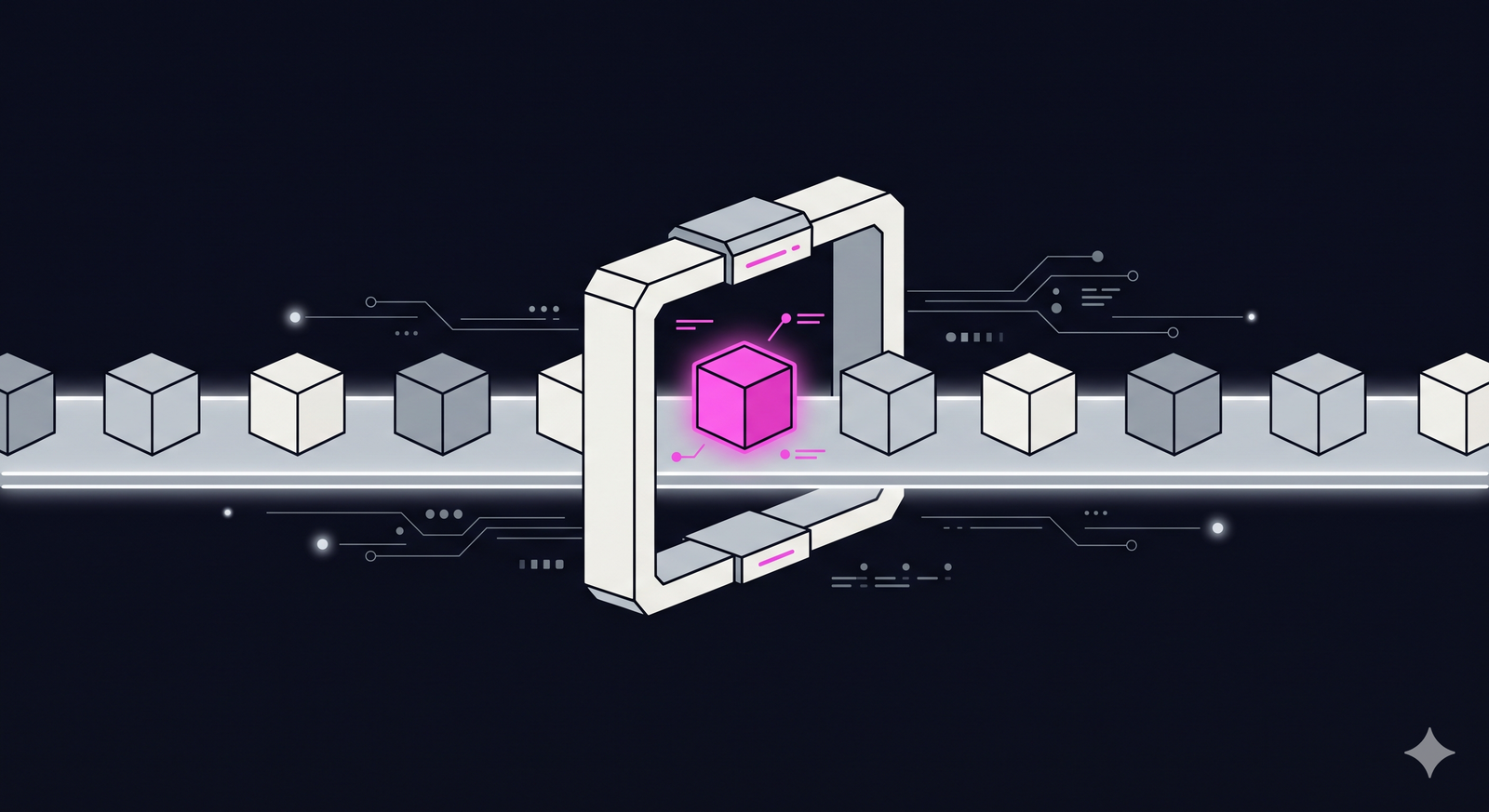
Automating data quality monitoring in live machine learning pipelines is the continuous, programmatic validation of incoming data streams against expected statistical baselines. This process detects anomalies, missing values, and data drift before corrupted inputs reach the model inference stage. By integrating automated checks, engineering teams prevent silent model degradation and ensure predictable AI performance.
The Hidden Cost of Silent ML Failures
Machine learning models are heavily dependent on the data fed into them during production. Therefore, if the incoming data breaks, the model breaks. However, unlike traditional software that crashes with loud error messages, machine learning models fail silently. Specifically, a model will happily process garbage data and confidently return a completely inaccurate prediction.
The financial impact of these silent failures is staggering. According to a comprehensive study by Gartner, poor data quality costs organizations an average of $12.9 million annually. Furthermore, IBM estimates that bad data costs the US economy roughly $3.1 trillion per year. These statistics demonstrate a clear reality for engineering teams. You cannot rely on manual audits to catch data errors in real-time. Consequently, you must build automated, rigorous monitoring systems directly into your architecture.
When you deploy models into the real world, the environment constantly changes. Sensors degrade, user behavior shifts, and upstream software teams unexpectedly alter database schemas. As a result, maintaining robust data analytics infrastructure requires proactive, automated quality gates.
Understanding the Types of Data Degradation
Before you can automate your monitoring, you must clearly understand what you are monitoring for. Machine learning data typically fails in three distinct ways.
First, schema changes occur when the fundamental structure of the data shifts. For instance, an upstream engineering team might change a column name from “customer_age” to “age” without notifying the data science team. Consequently, the model receives a null value for a critical feature.
Second, missing or corrupted values happen frequently in live systems. Network timeouts might cause a batch of records to drop. Alternatively, a broken physical sensor might suddenly output extreme, impossible values like a temperature of negative one million degrees.
Third, data drift occurs when the statistical distribution of the live data slowly diverges from the training data over time. For example, a machine learning model trained to predict housing prices during an economic boom will fail during a recession because the underlying economic data distribution has fundamentally shifted.
Step-by-Step Logic for Automated Monitoring
Building an automated monitoring pipeline requires strict engineering discipline. You must intercept the data before it hits your inference servers. Here is the exact methodology for implementing these safeguards.
Step 1: Establish Strict Data Contracts
You cannot monitor data if you do not know what the data should look like. Therefore, your first step is to define explicit data contracts. A data contract is a formalized agreement detailing the exact schema, data types, and acceptable ranges for every feature entering your pipeline. If a feature represents a percentage, the contract must state that the value can never drop below zero or exceed one hundred.
Step 2: Implement Schema and Value Validation
Once you have contracts, you must enforce them automatically at the ingestion layer. Using open-source frameworks like Great Expectations, you can programmatically assert these rules against every incoming batch of data. If a batch violates the schema, the automated pipeline must immediately quarantine that data. Furthermore, it must alert the engineering team before the bad data poisons the model.
Step 3: Calculate Statistical Drift Metrics
Validating schemas is relatively straightforward. However, detecting subtle data drift requires complex mathematics. Your automated system must continuously calculate the statistical distance between the live production data and the original training baseline. Engineers typically use mathematical functions like the Kolmogorov-Smirnov test for continuous numerical data. Conversely, they use the Chi-Square test for categorical data. If the statistical distance exceeds a pre-defined threshold, the system flags a drift event.
Step 4: Configure Circuit Breakers and Fallbacks
Detection is useless without automated action. Therefore, you must wire your monitoring alerts directly to your inference infrastructure. If the pipeline detects severe data corruption, it should trip a circuit breaker. This action temporarily stops the primary model from making predictions. Instead, the system automatically routes requests to a simple heuristic rule or a robust fallback model. This ensures your custom AI development projects remain online and safe, even during upstream data outages.
Core Architectural Components
To visualize how these automated checks function within a broader system, review the summary table below. It outlines the primary issues and the corresponding automated responses.
| Data Issue Type | Detection Methodology | Automated Pipeline Response |
| Schema Violation | Contract testing against expected column names and types. | Quarantine data, halt inference for affected batch, trigger high-priority alert. |
| Missing Values | Null value threshold counting. | Impute with baseline mean/median if under threshold; reject batch if over threshold. |
| Feature Drift | Statistical distance calculations (e.g., Wasserstein distance). | Log warning, trigger automated model retraining pipeline. |
| Concept Drift | Performance monitoring of model output vs. ground truth. | Alert data science team to investigate new real-world patterns. |
Measuring Distance in Data Distributions
To truly automate drift detection, your system must understand the shape of your data. The Population Stability Index (PSI) is a highly effective metric used heavily in financial services. Specifically, PSI measures how much a population has shifted over time.
If your PSI score is below 0.1, your data distribution is stable. Furthermore, if the score falls between 0.1 and 0.2, the pipeline should log a minor warning. However, if the PSI exceeds 0.2, the data has drifted significantly. Consequently, the automated system must trigger a retraining job immediately.
In advanced NLP applications, measuring drift becomes even more complex. You cannot simply calculate the mean of a text paragraph. Instead, engineers must monitor the distribution of the text embeddings. By tracking the vector space of incoming text, the system can automatically detect when users start talking about entirely new topics that the model has never seen before.
Case Study in Industrial IoT Data Quality
To fully understand the practical implementation, consider a manufacturing company deploying predictive maintenance models. The company installed thousands of vibration sensors on factory equipment. Initially, the machine learning pipeline ingested sensor data directly into the inference engine.
However, after three months, a firmware update on the edge devices accidentally changed the vibration frequency measurement from Hertz to Kilohertz. Because the ML pipeline lacked automated monitoring, the model silently ingested the massive numerical values. Consequently, the model predicted catastrophic failure for every single machine on the factory floor, causing a massive, costly, and unnecessary factory shutdown.
Following this incident, the engineering team implemented automated data quality gates. They utilized whylogs, an open-source data logging library, to generate statistical profiles of the sensor data every five minutes. Next, they configured the pipeline to automatically compare these live profiles against the historical baseline. Six months later, when a similar sensor malfunction occurred, the automated system instantly detected the statistical anomaly. It successfully quarantined the bad data, alerted the maintenance team, and prevented another false alarm. This methodology is absolutely critical for deploying reliable computer vision and industrial sensor networks.
Managing the Cost of Continuous Monitoring
Automating data quality checks introduces additional computational overhead. Calculating complex statistical metrics on terabytes of live streaming data is expensive. Therefore, you must optimize your monitoring architecture carefully.
Instead of running heavy statistical tests on every single row of data, you should implement strategic data sampling. Your automated pipeline can randomly sample ten percent of the incoming stream. This approach drastically reduces compute costs while maintaining high statistical confidence. Additionally, you should calculate aggregate profiles rather than storing raw data. Tools that summarize data into compact mathematical sketches allow you to detect drift efficiently without incurring massive database storage fees.
If you are operating consumer-facing tools, such as an AI image detector, the volume of incoming requests can be astronomical. In these high-throughput scenarios, lightweight aggregate profiling is the only mathematically viable way to monitor data quality without slowing down the API response times.
Actionable Next Steps
Building a resilient, automated machine learning pipeline prevents catastrophic business failures and drastically reduces engineering stress. To begin securing your live data streams today, execute the following three steps.
- Write explicit data contracts for your three most critical model features, explicitly defining their expected data types, minimum boundaries, and maximum boundaries.
- Integrate an open-source profiling library into your data ingestion layer to automatically generate descriptive statistics for every new daily batch of data.
- Configure a simple alerting mechanism that instantly notifies your engineering communication channels whenever a live data batch violates the predefined schema contracts.
If you require expert assistance designing and implementing robust data quality automation for your enterprise, our AI and Data Science agency can help. We provide comprehensive AI consulting strategy and engineering support to ensure your models remain accurate in production. Contact our team at https://tensour.com/contact to discuss your infrastructure needs.
Leave a Reply