
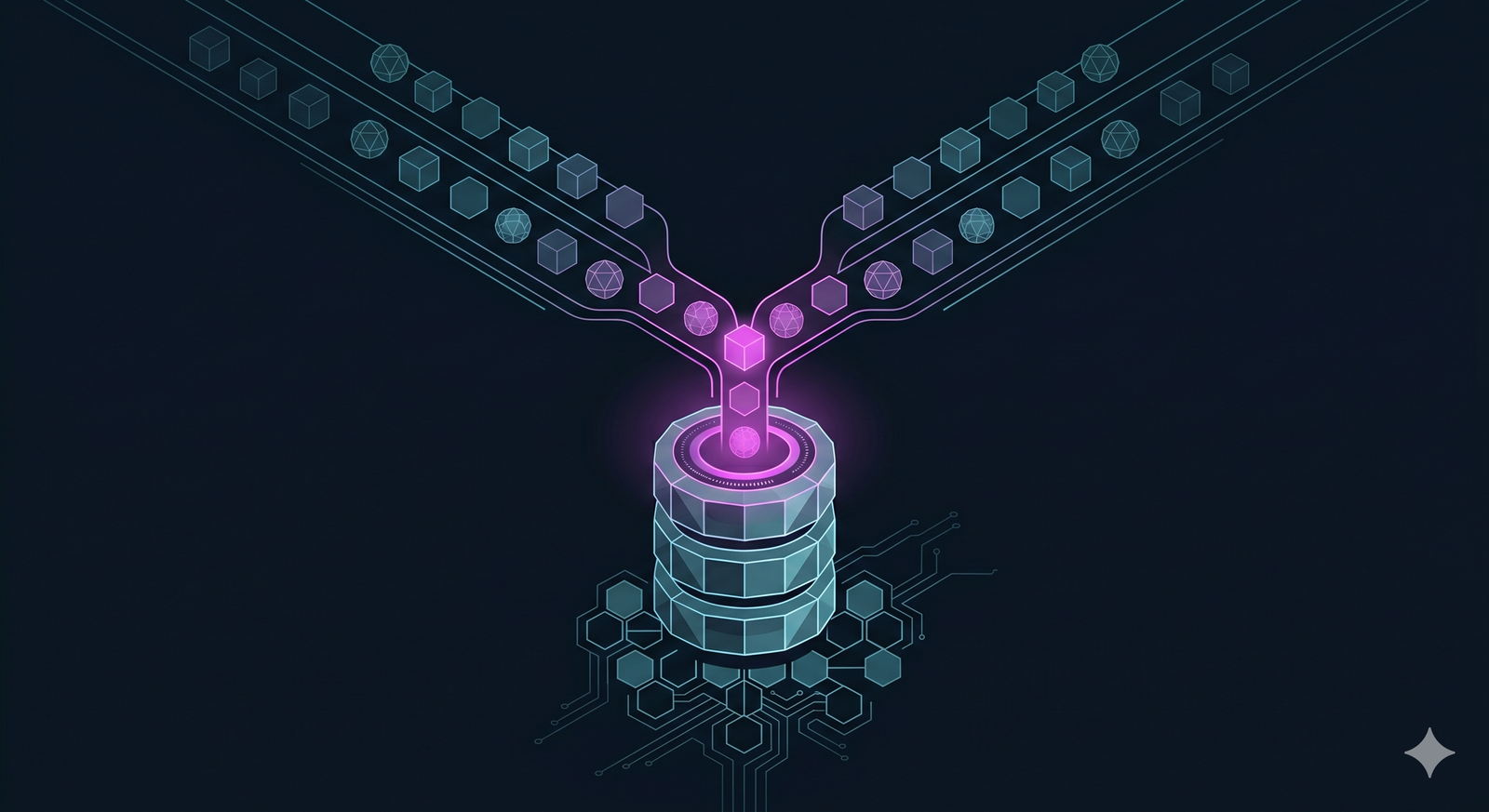
Automating CRM data entry and sales pipeline enrichment using AI involves integrating natural language processing and machine learning tools directly into your sales infrastructure. Specifically, these AI models automatically extract contact details from emails, transcribe sales calls, and pull third-party firmographic data to populate your CRM without human intervention. By deploying these automated data pipelines, engineering teams completely eliminate manual record updates and ensure sales representatives work with highly accurate, constantly enriched lead profiles.
The Staggering Cost of Manual CRM Management
Sales teams rely heavily on Customer Relationship Management (CRM) databases to track deals and customer interactions. However, maintaining these massive databases manually is incredibly inefficient. According to recent analysis by consulting firms like Bain & Company, sales professionals spend only about 25% of their time actually selling to customers. Consequently, they waste the vast majority of their week on administrative tasks like logging emails, updating deal stages, and researching prospects.
Furthermore, manual data entry inevitably leads to severe human error. When a sales representative rushes to close out their day, they naturally misspell names, enter incorrect phone numbers, or leave critical qualification fields entirely blank. Industry research indicates that poor data quality costs businesses between 15% and 25% of their total revenue annually. Specifically, inside sales reps waste over 500 hours per year simply dealing with inaccurate or duplicate records. Therefore, relying on humans to manage massive datasets is no longer a viable business strategy. You must build robust data analytics architectures to handle this volume programmatically.
How AI Automates CRM Data Entry
Artificial intelligence solves the data entry bottleneck by intercepting communications before they ever require manual review. Modern AI systems act as a silent middleware layer sitting securely between your communication channels and your CRM database.
First, email parsing algorithms utilize advanced NLP to read incoming and outgoing messages. When a prospect replies with a new phone number in their email signature, the AI instantly detects this new entity. Subsequently, it pushes an API call to update the specific contact record in platforms like Salesforce or HubSpot.
Second, conversational AI tools seamlessly integrate with your VoIP phone systems. During a live sales call, the system transcribes the entire conversation in real-time. Once the call inevitably ends, a language model extracts the critical action items, budget constraints, and timeline discussions. Finally, it automatically logs a cleanly formatted summary directly into the CRM deal notes. Consequently, the sales representative simply hangs up the phone and moves immediately to the next call.
Automating Sales Pipeline Enrichment
Basic contact details are rarely enough to close complex enterprise deals. Therefore, sales teams must enrich their pipelines with deep contextual data. Historically, representatives spent hours manually scraping professional networks or corporate websites to find company revenue, technology stacks, and recent news events.
AI completely automates this tedious enrichment phase. When a new email address enters the CRM, an automated workflow triggers immediately. The AI agent pings external enrichment APIs, such as Clearbit or ZoomInfo. Next, the agent meticulously compiles firmographic data, including company size, industry classification, and geographic location.
Moreover, advanced models analyze technographic intent signals. For example, if you sell cybersecurity software, the AI can rapidly scan job postings and technology forums to determine if the target company recently suffered a data breach or hired a new Chief Information Security Officer. The system then automatically populates custom CRM fields with these highly relevant insights. If you are developing proprietary scrapers, our custom AI development services heavily assist you in building secure, compliant data extraction pipelines.
Preventing CRM Data Decay
Information changes constantly in the business world. People switch jobs, companies get acquired, and phone numbers change. Therefore, an automated CRM is not just about initial entry; it is heavily focused on continuous maintenance. AI models can actively monitor the web for signals that a contact’s employment status has shifted.
Consequently, if a prospect updates their job title on a professional network, the AI pipeline immediately detects the change. Subsequently, it flags the CRM record for an automated update. This proactive monitoring completely prevents data decay. Indeed, a self-cleaning database is the ultimate goal of modern sales automation. For instance, teams deploying robust computer vision for document parsing can even automate the extraction of data from physical business cards handed out at conferences, feeding them directly into the continuously updated system.
Step-by-Step Logic for Implementation
Transitioning from manual entry to an automated AI architecture requires deliberate planning. You cannot simply flip a switch and expect perfection. Instead, strictly follow this exact engineering sequence to guarantee operational success.
Step 1: Audit and Clean Existing Data
Before introducing automation, you must thoroughly clean your historical data. If you feed an AI agent a database filled with duplicates, it will logically generate flawed insights. Use a deduplication script to merge overlapping accounts and delete hard-bounced email addresses.
Step 2: Map the Data Schema
Explicitly define exactly which fields your AI is allowed to update. Create a strict data contract mapping the AI output variables to your CRM fields. For example, ensure the AI maps “Annual Revenue” strictly to a numerical field, not a text string.
Step 3: Deploy the Integration Middleware
Connect your communication tools to your CRM using secure APIs. Platforms like Zapier or specialized integration platforms as a service (iPaaS) perfectly handle the routing. Configure the webhooks so that every new calendar booking or signed contract automatically triggers the AI processing layer.
Step 4: Implement Confidence Thresholds
Do not let AI overwrite critical data blindly. Instead, implement a strict confidence score mechanism. If the AI is 99% confident it found a new phone number, it updates the field automatically. However, if the confidence score drops below 80%, the system simply flags the update for a quick human review. This hybrid approach guarantees maximum accuracy.
Summary of CRM Automation Benefits
To quickly synthesize the direct operational differences between these two methodologies, rigorously review the comprehensive summary table below.
| Feature Metric | Manual CRM Management | AI-Automated CRM Pipeline |
| Data Entry Time | 10 to 15 hours per week per rep | Near zero (fully automated) |
| Error Rate | High (typos, forgotten fields) | Extremely Low (systematic extraction) |
| Profile Enrichment | Slow, limited to manual research capacity | Instantaneous, deep firmographic data |
| Scalability | Requires hiring more human SDRs | Scales infinitely via server compute |
| Representative Focus | Administrative tasks and data hygiene | Relationship building and deal closing |
Case Study in B2B Software Sales
To thoroughly understand the practical impact of this technology, closely examine a mid-sized B2B software vendor. The company employed forty sales representatives. Initially, their pipeline suffered from severe data decay. Reps complained that roughly 30% of their assigned leads contained outdated job titles or dead phone numbers. Furthermore, managers lacked accurate pipeline visibility because reps routinely forgot to update deal stages after important meetings.
The engineering team implemented an automated, AI-driven enrichment and entry pipeline. They deployed a custom NLP model to monitor email sentiment and automatically update the “Deal Probability” field based on customer language. Additionally, they integrated an automated enrichment agent that populated new leads with verified industry data within seconds of creation.
The operational results were highly definitive. By eliminating the administrative burden, sales representatives regained roughly four hours of actual selling time every single week. Consequently, the company saw a 15% increase in overall sales conversion rates because reps followed up faster and with much better personalization. Furthermore, CRM data accuracy jumped to 98%, finally giving executives reliable forecasting metrics. If your organization struggles with similar inefficiencies, our AI consulting strategy experts can easily map out an identical integration plan.
Security and Data Privacy Considerations
Automating data pipelines inherently introduces severe security responsibilities. When AI agents read internal emails and external databases, they systematically process highly sensitive personally identifiable information (PII). Therefore, you must strictly construct these pipelines with robust compliance frameworks.
If you utilize third-party language models to summarize sales calls, you must explicitly ensure your enterprise agreement forbids the provider from using your CRM data to train their public models. Moreover, you should diligently implement robust role-based access controls within your CRM. The AI service account should only have permission to read and write specific, designated fields. Consequently, this prevents the automated system from accidentally altering financial contracts or sensitive legal documents. Secure system design is the absolute foundation of all enterprise machine learning deployments.
Actionable Next Steps
Building a reliable, automated CRM architecture immediately boosts your revenue by freeing up your human workforce. To start aggressively optimizing your sales infrastructure today, rigorously execute these three concrete steps.
- Run an immediate audit on your current CRM database to definitively identify exactly which five custom fields are most frequently left blank by your sales team.
- Integrate a basic AI transcription tool into your primary video conferencing software to automatically generate and log meeting summaries into your contact records.
- Establish a standardized web hook that reliably sends all new inbound website leads through a third-party enrichment API before those leads ever appear in a representative’s queue.
If you fundamentally need custom help implementing these complex data pipelines and automated enrichment workflows, our AI and Data Science agency can expertly assist you. We purposefully build secure, high-performance infrastructure that drastically scales your sales capacity. Contact our engineering team today at https://tensour.com/contact.
Leave a Reply