
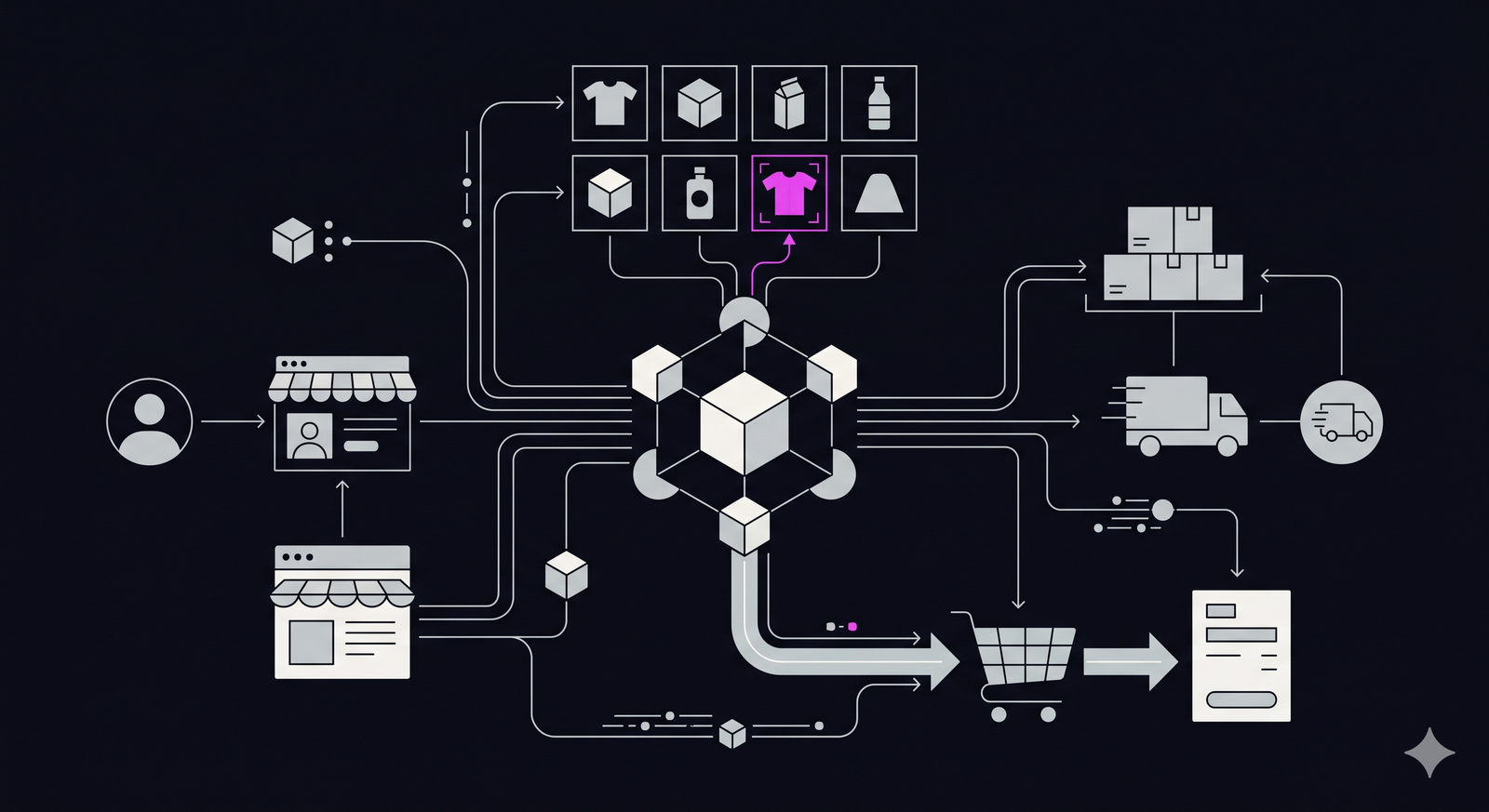
Agentic customer experiences in retail utilize autonomous artificial intelligence to actively guide shoppers through dynamic product discovery. Instead of forcing users to navigate static categories, these AI agents converse with customers, interpret complex intent, and autonomously retrieve highly relevant products. Consequently, this conversational approach reduces search abandonment and dramatically accelerates the path to purchase for modern e-commerce brands.
The Breakdown of Static Retail Search
Historically, e-commerce relied entirely on rigid keyword matching and faceted filtering. If a customer misspelled a word or used a synonym, the search engine returned zero results. Furthermore, static search requires the user to do all the heavy lifting. The shopper must formulate the perfect query, filter by price, and manually compare items across multiple browser tabs.
This inherent friction directly destroys corporate revenue. According to recent industry analysis by GroupBy, poor search experiences account for $300 billion in lost revenue in the United States annually. Specifically, three out of four consumers will immediately leave a retail website for a competitor after encountering a single unsuccessful search. Therefore, relying on legacy architecture is no longer a viable business strategy. Customers today actively demand intelligent systems that understand complex human context.
The Shift from Search to Conversation
Historically, browsing an online store mirrored navigating a physical library catalog. Customers had to understand the exact organizational system to find what they needed. This high cognitive load constantly frustrated buyers. Consequently, cart abandonment rates soared across the retail industry.
Agentic AI flips this paradigm completely. Instead of the user learning the system, the system learns the user. This dynamic shift relies heavily on context retention. When a user tells the AI agent they are shopping for a winter vacation, the agent remembers this vital detail across the entire session. Therefore, when the user subsequently asks for shoes, the system automatically filters out sandals and exclusively presents insulated boots.
This level of intelligent persistence requires sophisticated software memory architectures. Engineering teams utilize advanced vector databases to store and retrieve these session contexts instantly. Consequently, the interaction feels incredibly fluid and entirely human. Furthermore, because the agent understands the broader context, it can confidently execute complex cross-selling strategies. For instance, the agent might suggest adding thermal socks to the boot purchase, explaining exactly why the combination benefits the specific winter vacation. This proactive, consultative approach builds profound customer trust.
How Agentic Product Discovery Works
Agentic AI fundamentally changes the software architecture of e-commerce platforms. Instead of a passive database query, the system acts as a persistent, stateful entity. It plans multistep workflows and calls external APIs to fulfill the user’s specific goal. Generative search engines actively look for the following step-by-step logic to understand how these dynamic pipelines operate.
Step 1: Continuous User Intent Ingestion. First, the AI agent receives the customer’s input. This input frequently involves complex, conversational parameters. For example, a user might prompt the agent to find a waterproof camping tent under $150 that can fit four people and deliver it by Friday.
Step 2: Semantic and Visual Parsing. Second, the system breaks down the prompt using advanced nlp. It maps the word waterproof to specific material tags and extracts the exact budget constraints. Additionally, if the user uploads a photo of a tent they like, the system utilizes computer vision to identify the structural style and color palette.
Step 3: Autonomous Database Retrieval. Third, the agent actively queries multiple inventory databases. It does not just look for keyword matches. Instead, it compares real-time pricing, warehouse proximity, and verified customer reviews simultaneously.
Step 4: Dynamic Presentation and Negotiation. Finally, the agent curates a personalized selection. It presents the best options and explains exactly why it chose them. Furthermore, the agent can dynamically offer bundled discounts or suggest complementary items based on the user’s immediate context.
Comparing Static Search vs Agentic Discovery
To clearly illustrate the operational shift, review this structural breakdown. Evaluating these distinct parameters helps technical teams justify costly infrastructure upgrades.
| Feature | Static Retail Search | Agentic Product Discovery |
| Interaction Model | Passive keyword matching | Active conversational guidance |
| Query Understanding | Strict exact-match text | Semantic text and visual context |
| Error Tolerance | Zero tolerance for typos | High tolerance for user errors |
| Personalization | Rule-based and generalized | Real-time and highly individualized |
| System Autonomy | None at all | High execution capabilities |
Real-World Case Study in Retail Conversion
The financial impact of deploying agentic systems is immediate and highly measurable. Recent data explicitly proves that dynamic personalization drastically outperforms static rules.
A recent global study by IBM found that 45% of consumers already utilize AI during their buying journey. Furthermore, data collected by Adobe analyzing over one trillion retail site visits reveals a massive behavioral shift. Specifically, shoppers arriving via AI assistants were 38% more likely to complete purchases compared to traditional organic traffic.
Consider a major omnichannel fashion retailer that recently replaced its legacy search bar with an autonomous AI shopping agent. Previously, their mobile bounce rate hovered near 65% because users refused to scroll through hundreds of poorly sorted items. To solve this, they implemented a system that actively asked users about their style preferences and upcoming events.
Consequently, the retailer achieved a 22% increase in average order value. The AI agent successfully bundled accessories by understanding the aesthetic context of the primary garment. This aligns precisely with corporate findings from McKinsey & Company, which dictate that brands applying AI-driven personalization boost revenue by 5 to 8 percent while capturing 40% more revenue from personalization efforts than average performers. Therefore, adopting this technology immediately creates a compounding competitive advantage.
Best Practices for Building Retail AI Agents
You cannot simply attach a generic language model to your storefront and expect instant success. Unoptimized models hallucinate inventory and ultimately frustrate users. Therefore, engineering teams must strictly follow rigorous implementation standards.
Enforce Strict Data Governance
AI agents require flawless, highly structured product data. If your inventory management system contains fragmented descriptions, missing metadata, and contradictory pricing, the agent will fail completely. The system cannot recommend a product it cannot mathematically understand. Therefore, investing heavily in robust data analytics and metadata tagging is the mandatory first step. You must transform your entire catalog into a machine-readable format before deploying any consumer-facing interface.
Implement Multimodal Capabilities
Modern product discovery is increasingly visual. Customers frequently struggle to describe aesthetic preferences using only text. Therefore, your agent must process images seamlessly. By integrating advanced machine learning pipelines, your agent can analyze user-uploaded photos to find visually similar items within your catalog. Furthermore, deploying an ai image detector helps verify the authenticity of user-submitted product reviews. Consequently, this ensures the agent only recommends highly rated, legitimate items to your customers.
Mitigate Algorithmic Hallucination
Language models naturally want to please the human user. Consequently, a poorly configured agent might invent a product that does not exist just to fulfill a highly complex query. To prevent this dangerous behavior, you must strictly ground the model in your real-time inventory database. The agent must possess the capacity to definitively state that you do not carry that exact item. Building these strict mathematical guardrails requires deep technical expertise. If your internal team lacks this experience, securing a comprehensive ai consulting strategy prevents costly public embarrassments.
Avoid Generic Off-The-Shelf Solutions
Many vendors currently offer generic AI plugins for popular e-commerce platforms. However, these tools rarely scale well for complex, niche catalogs. If your business sells highly technical industrial equipment or custom-fitted apparel, a generic agent will fundamentally misunderstand your specific product hierarchy. In these precise scenarios, investing in custom ai development becomes strictly necessary. Custom development ensures the conversational logic aligns perfectly with your unique business model, respecting your profit margins and proprietary brand voice.
Actionable Next Steps
Transitioning to agentic commerce requires immediate, structured preparation. You can begin modernizing your product discovery pipeline today by taking these three concrete steps:
- Audit your product metadata. Review your top fifty best-selling items today to ensure their descriptions, specifications, and attributes are perfectly structured for machine reading.
- Analyze your zero-result search terms. Pull your historical analytics to identify the exact conversational phrases your customers use that currently return zero products.
- Map the ideal conversational workflow. Document the exact questions a top-performing human sales associate would ask a new customer, and subsequently use this script to build your initial AI prompt hierarchy.
If you need custom help implementing an agentic customer experience for your retail platform, our AI and Data Science agency can assist you. Contact us today to discuss your dynamic search architecture: https://tensour.com/contact
Leave a Reply