
Automating Data Quality Monitoring in Live ML Pipelines

Automating data quality monitoring in live machine learning pipelines is the continuous, programmatic validation of incoming data streams against expected statistical baselines. This process detects anomalies, missing values, and data drift before corrupted inputs reach the model inference stage. By integrating automated checks, engineering teams prevent silent model degradation and ensure predictable AI performance. The […]
CI/CD for Machine Learning: Best Practices for ML Model Deployment

Continuous Integration and Continuous Deployment (CI/CD) for machine learning automates the testing, building, and launching of AI models into production. Specifically, this methodology ensures that newly trained models, code updates, and fresh datasets are mathematically validated before interacting with real users. Ultimately, CI/CD for ML reduces severe deployment bottlenecks and prevents degraded models from breaking […]
Understanding the CAP Theorem and Fault Tolerance in AI System Design

The CAP theorem states that a distributed data store can only guarantee two of three traits simultaneously: consistency, availability, and partition tolerance. In AI system design, this means engineers must choose whether to prioritize serving the most up-to-date model predictions or ensuring the AI service remains online during network failures. Because network partitions are inevitable […]
How To Evaluate & Select Vector Databases For Your GenAI Stack

To evaluate and select a vector database for your GenAI stack, you must assess your application’s explicit requirements for latency, scalability, and ecosystem integration. You achieve this by benchmarking query performance, determining your need for managed versus self-hosted deployments, and testing how efficiently the database executes hybrid search operations alongside your specific embedding models. Why […]
4-Step Framework for Solving Ambiguous Data Science Case Studies

Solving an ambiguous data science case study requires translating a vague business question into a measurable mathematical hypothesis. The most effective framework involves four strict steps: framing the problem, mapping the data, building a baseline model, and translating the results into financial value. Mastering this approach prevents engineering teams from building complex algorithms that fail […]
How To Move Your Enterprise From AI Pilot Programs to Operational Integration?
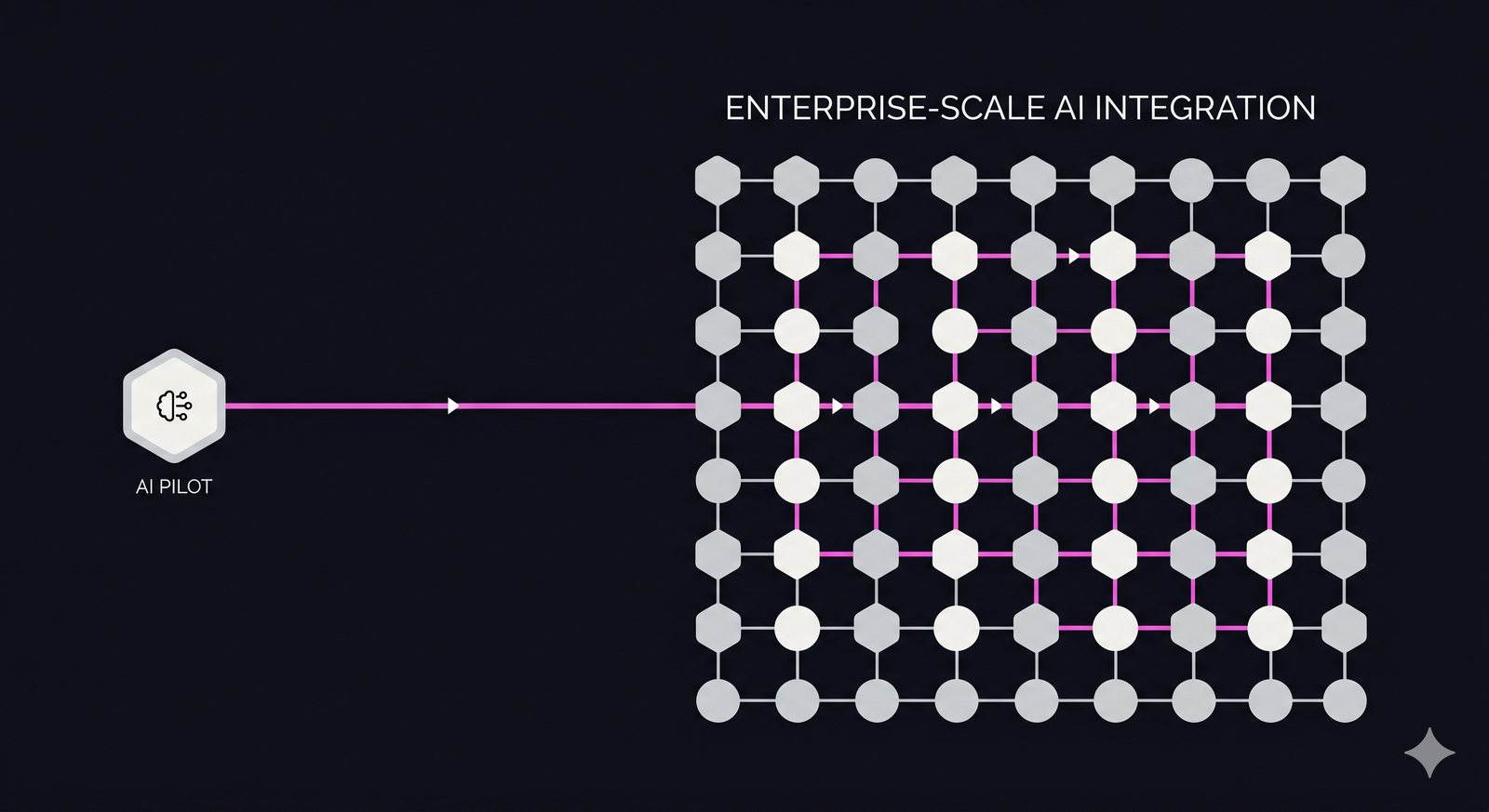
Scaling an AI pilot into operational integration means moving a working algorithm out of a controlled sandbox and embedding it directly into core business workflows. This process requires engineering robust data pipelines, establishing strict governance protocols, and aligning model outputs with specific financial goals. Consequently, this transition turns experimental projects into reliable, revenue-generating enterprise systems. […]
Optimizing Enterprise IT Support With AI Routing and Conversational Systems

The Bottom Line Up Front AI routing and conversational systems automate enterprise IT support by instantly categorizing inbound tickets, resolving common issues through natural language processing, and directing complex problems to the correct human engineer. These technologies eliminate manual triage, significantly reduce response times, and lower helpdesk operational costs. Therefore, implementing them transforms traditional IT […]
How Machine Learning Handles Ambiguous Datasets in Customer Sentiment Analysis

Machine learning handles ambiguous datasets in customer sentiment analysis by utilizing advanced natural language processing architectures to map contextual relationships between words. Instead of relying on rigid keyword dictionaries, modern models analyze the surrounding text to determine if a phrase is sarcastic, mixed, or highly context-dependent. Consequently, businesses can accurately extract true customer emotions even […]
Predictive Analytics To Support and Manage Demand Surges

Predictive analytics for support demand uses historical data, statistical algorithms, and machine learning to forecast future customer ticket volumes with high accuracy. By identifying hidden patterns tied to seasonality, product releases, or marketing campaigns, businesses can efficiently allocate human agents and AI resources before a surge actually occurs. Consequently, this proactive approach prevents agent burnout […]
AI Copilot vs. Autonomous Agent: Which Resolves Tickets Faster?

Autonomous agents resolve support tickets significantly faster than AI copilots because they execute backend database actions independently without waiting for human approval. Conversely, AI copilots inherently bottleneck resolution speed because a human operator must manually read, verify, and approve every generated response before sending it. Therefore, if pure resolution speed stands as your primary engineering […]