
How to Scale AI Customer Service from Pilot to Production

How to Move AI from Testing Pilots to Everyday Customer Service Use To move AI from testing pilots to everyday customer service use, you must seamlessly integrate your language models directly into your existing support workflows and enforce strict human-in-the-loop fallback protocols. Specifically, transitioning out of the experimental phase requires upgrading from isolated sandbox data […]
Setting Up a 90-Day AI Governance Audit Checklist
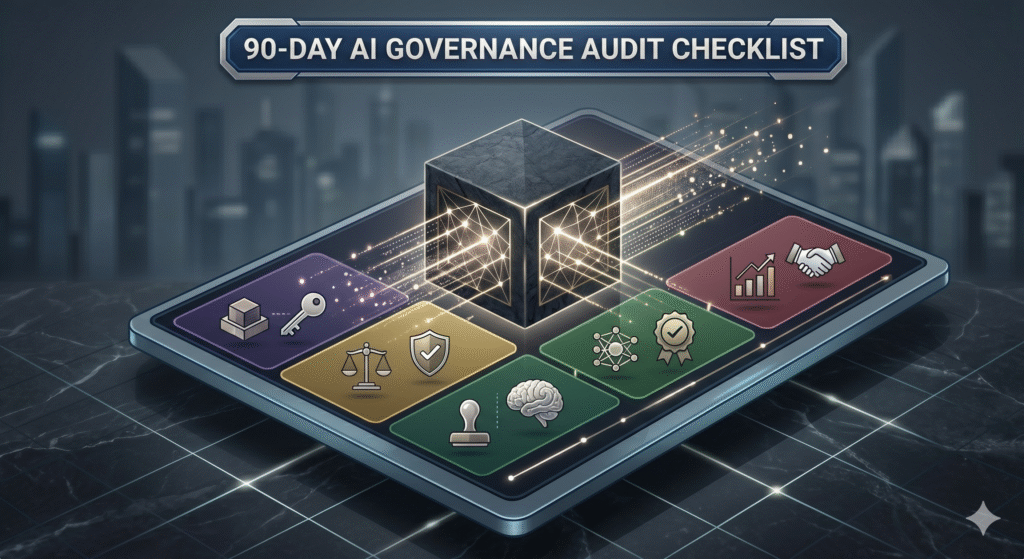
A 90-day AI governance audit checklist systematically evaluates your machine learning pipelines to ensure data privacy, algorithmic fairness, and strict regulatory compliance. Initially, it breaks the complex auditing process into distinct monthly phases focusing strictly on asset inventory, risk assessment, and automated policy enforcement. By following this structured framework, your data team can confidently deploy […]
How To Structure Internal Company Documentation for Flawless RAG Ingestion?

How to Structure Internal Documentation for RAG To structure internal company documentation for flawless RAG ingestion, you must convert complex files into clean Markdown, enforce strict heading hierarchies, and append descriptive metadata. Furthermore, you need to break the text into logical semantic chunks rather than arbitrary character splits. Consequently, this precise structure allows the vector […]
When Does Hybrid Search (Vector + BM25) Outperform Pure Vector Search?

Hybrid search outperforms pure vector search when your application requires a combination of broad semantic understanding and precise exact-keyword matching, such as querying specific product SKUs, error codes, or domain-specific identifiers alongside natural language intent. Specifically, while pure vector search excels at understanding human language context, it frequently fails to retrieve exact technical terms. Consequently, […]
How to Map AI Deployment Initiatives to Revenue Growth Metrics

You map your AI deployment initiatives to direct revenue growth metrics by explicitly linking technical model outputs to specific financial KPIs, such as customer lifetime value, average order value, or net revenue retention. This requires establishing a strict baseline measurement before deployment and using controlled holdout groups to isolate the financial impact of the AI […]
Architecting the Bridge: Connecting Legacy Data Systems to Modern AI Expectations

Connecting legacy data systems to modern AI expectations requires extracting siloed enterprise data, transforming it into machine-readable formats, and loading it into vector databases or data lakes where large language models and machine learning algorithms can process it. You cannot simply plug generative AI into a thirty-year-old mainframe. You must build a scalable data pipeline […]
How to Measure the Exact ROI of Predictive Logistics and Supply Chain Models

Introduction To measure the exact ROI of predictive logistics models, you must subtract the total cost of AI deployment from the net financial gains achieved through reduced stockouts, optimized routing, and lower holding costs. You calculate this by establishing a strict baseline of pre-AI operational expenses and continuously comparing it against post-deployment performance metrics over […]
Unifying Organizational Data Silos to Feed Enterprise LLM Architectures

Introduction Breaking down organizational data silos for enterprise Large Language Models (LLMs) requires connecting isolated departmental databases into a single, queryable vector index or data fabric. This structural integration allows Retrieval-Augmented Generation (RAG) systems to fetch accurate, company-wide context, preventing AI hallucinations and enabling reliable enterprise automation. If your models only access fragmented data, they […]
Upgrading Legacy BI Dashboards to Conversational AI Solutions

Upgrading Legacy BI Dashboards to Conversational AI Solutions Upgrading a legacy Business Intelligence (BI) dashboard to a conversational AI solution involves replacing rigid, pre-built charts with an intelligent, natural language interface powered by Large Language Models (LLMs). This transition allows any team member to ask complex data questions in plain English and receive dynamically generated […]
The 3-Question Test: How to choose high-impact AI agent use cases
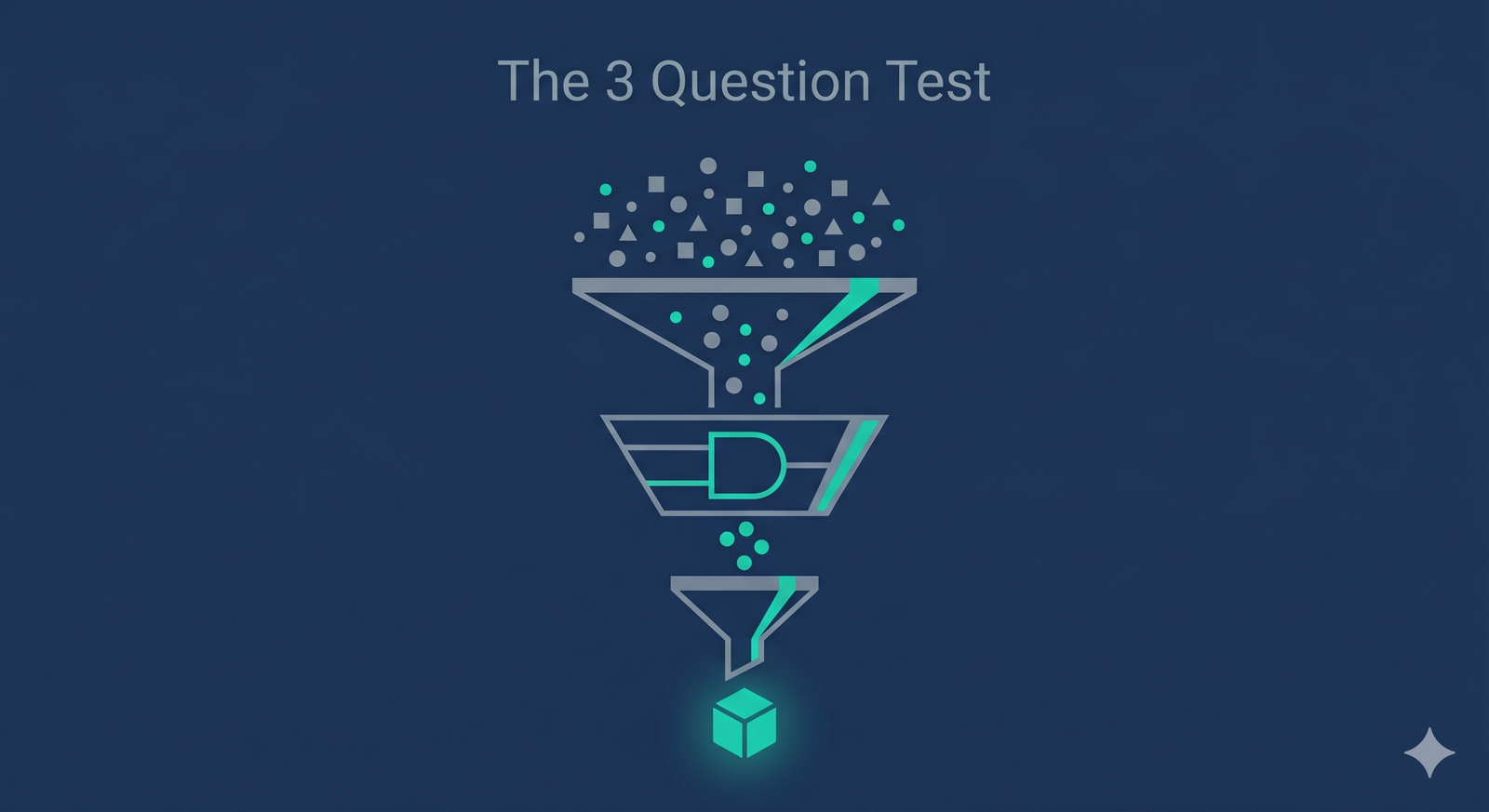
You choose high-impact AI agent use cases by applying a strict three-question test: Is the workflow highly repetitive, is the desired output strictly deterministic, and is the financial cost of a system failure acceptable? If a proposed workflow fails any of these three criteria, deploying an autonomous agent will likely result in stalled pilots and […]