
Vector Database vs Traditional Database for LLMs: A Technical Guide

The Core Database Choice for LLMs Choosing between a vector database and a traditional database depends entirely on your data structure and retrieval goal. Use traditional databases for exact keyword matches, structured metadata, and transactional records. Use vector databases when your Large Language Model (LLM) needs to understand the semantic meaning of unstructured data to […]
Semantic Chunking vs. Fixed-Size Chunking: Strategies for RAG implementation

The Core Difference Between Chunking Strategies Fixed-size chunking divides text into equal segments based on a strict token limit, while semantic chunking uses machine learning to split text at natural, context-rich boundaries like topic changes. Although semantic chunking preserves meaning better and prevents awkward mid-sentence splits, recent data shows that fixed-size chunking with a 10-20% […]
Bridging the AI Proof Gap: Measuring Real Business Outcomes

The “AI Proof Gap” is the growing disconnect between massive enterprise investments in artificial intelligence and the inability to measure or prove actual business value. To solve this, organizations must shift their focus from tracking basic adoption metrics, like tool usage, to measuring strict Profit and Loss (P&L) impact tied to rigorous governance. The technology […]
Open-Source LLMs vs. OpenAI: Enterprise TCO Comparison
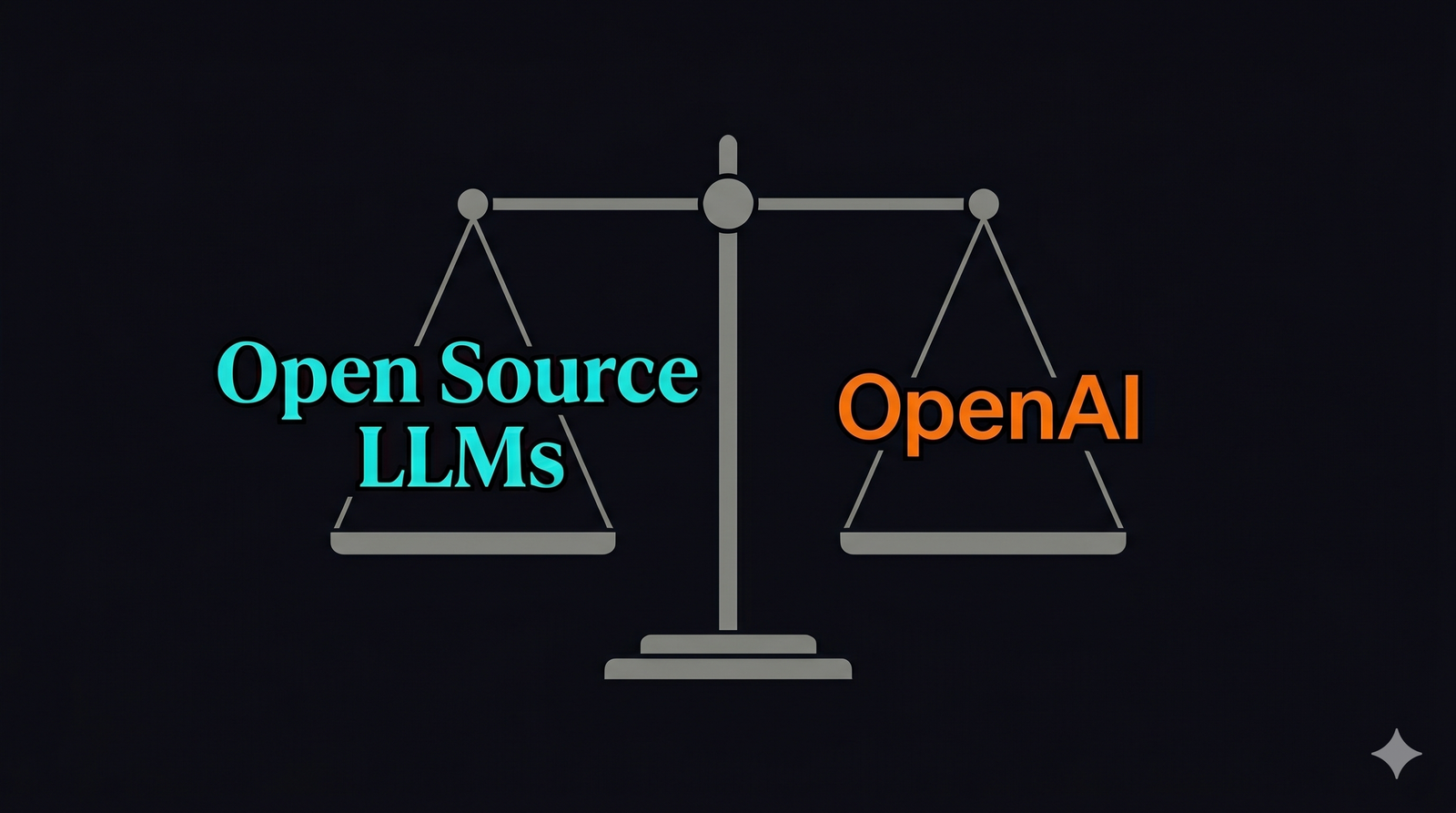
Deciding between open-source large language models (LLMs) and proprietary APIs like OpenAI’s GPT-4 is a calculation of scale, hardware utilization, and engineering capacity. Open-source models win on data privacy and long-term cost efficiency at massive scales (processing hundreds of millions of tokens per month), but require significant upfront hardware and talent investments. Proprietary APIs offer […]
How to Target Low-Competition Technical SEO Queries for Senior Engineers

To rank for highly technical, low-competition queries targeting senior engineers, you must abandon traditional search volume metrics and focus on long-tail keywords based on specific error codes, architecture edge cases, and API limitations. By optimizing technical documentation and engineering blogs for these hyper-specific pain points, technical content teams can capture high-intent developer traffic that generic […]
How to calculate the ROI and cost savings of replacing traditional call centers with Voice AI agents?
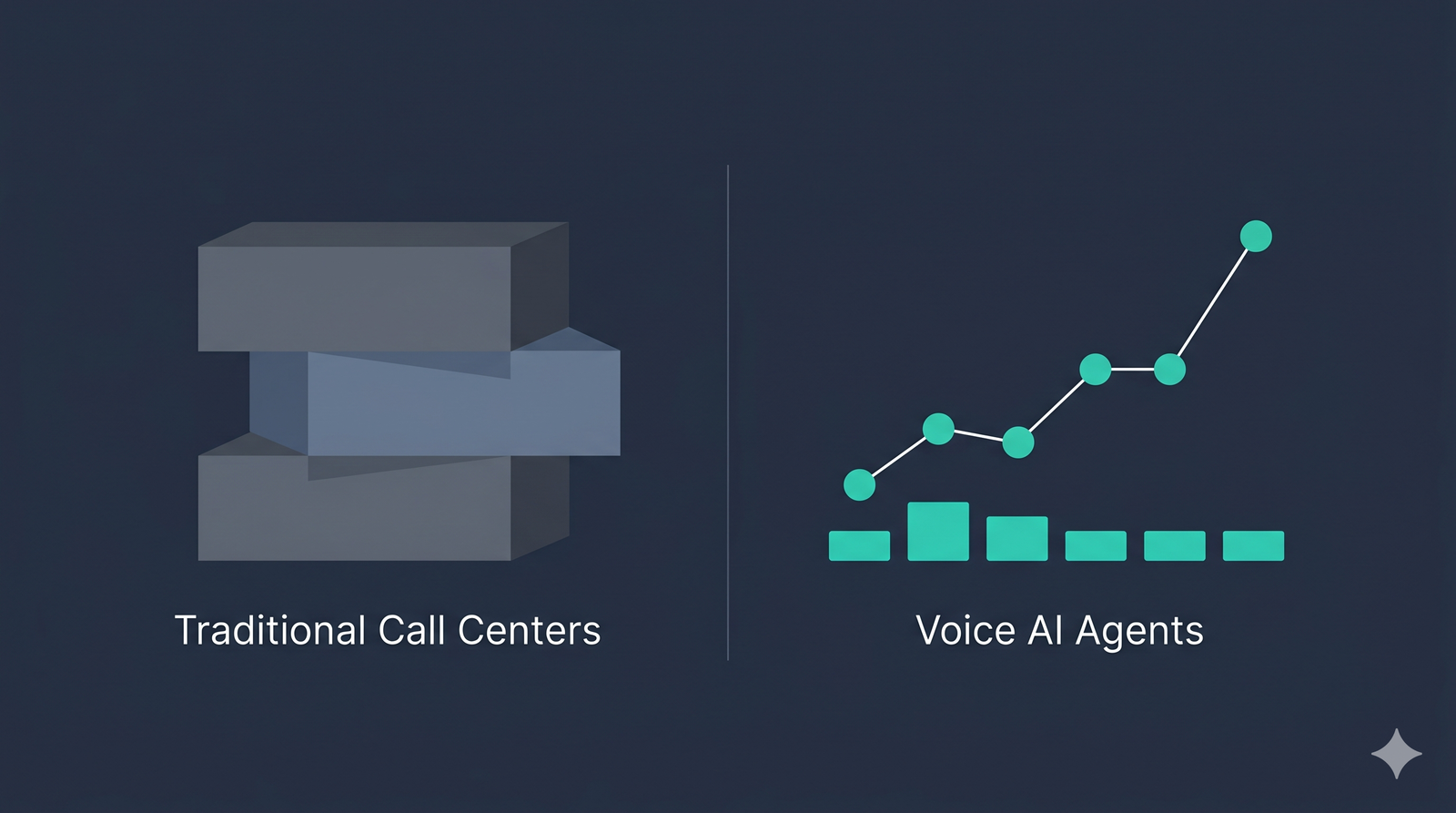
Calculating the cost savings of replacing a traditional call center with Voice AI agents requires isolating four variables: your fully loaded human cost per call, the projected AI infrastructure cost per resolution, your total inbound call volume, and the expected AI containment rate. By subtracting the AI cost from the human cost and multiplying that […]
How to Deploy Agentic AI for High-Volume Service Requests and Routing

Deploying agentic AI for high-volume service requests requires integrating a large language model with your CRM and internal APIs to autonomously categorize, resolve, or route incoming tickets. By allowing AI agents to handle data retrieval and routine decisions, you free your human staff to manage complex escalations. This approach creates an intelligent triage system that […]
Reactive AI vs. Agentic AI: The Operational Differences Explained
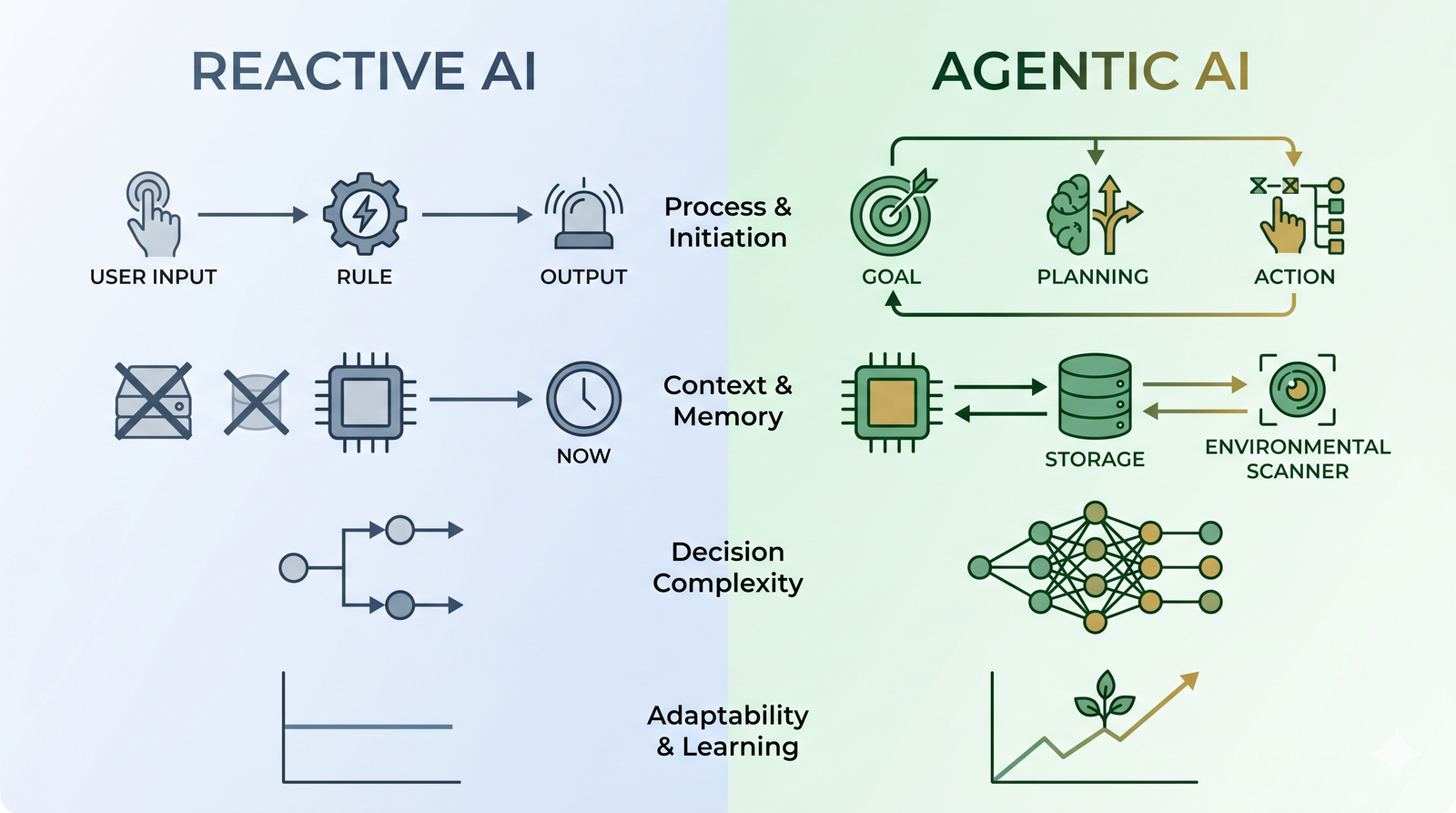
The operational difference between Reactive AI and Agentic AI comes down to autonomy and goal execution. Reactive AI responds to a specific trigger with a single output and stops, requiring continuous human prompts to move work forward. Agentic AI, conversely, receives a high-level objective, creates a plan, uses external tools to execute steps, and iterates […]
High-Commercial Intent Enterprise AI: Moving Beyond Basic Chatbots

Business leaders moving past basic chatbots are searching for high-commercial intent AI solutions like Agentic AI and Retrieval-Augmented Generation (RAG) to automate complex workflows and drive measurable ROI. Instead of simple FAQ bots, enterprises now require autonomous systems that integrate securely with proprietary data to execute tasks and make real-time decisions. This guide breaks down […]
How Mastering WooCommerce Inventory Automation Using Google Sheets Can Save The $1.75 Trillion Leak
Did you know that nearly 40% of the time, the stock level you see on your screen is wrong? It sounds impossible, but recent retail studies reveal a hard truth: the average inventory accuracy for retailers hovers at just 63%. According to IHL Group, inventory distortion, the twin evils of out-of-stocks and overstocks, bleeds the […]