
How to Modernize Investment Data Management with AI and Big Data

Modernizing investment data management requires migrating legacy relational databases into scalable Big Data architectures and applying artificial intelligence to automate data ingestion, normalization, and quality control. This integration allows asset managers to process vast amounts of unstructured alternative data and market feeds in real-time. The financial value is generated entirely by eliminating manual data reconciliation, […]
Top Techniques to Reduce Hallucination in Enterprise RAG Systems

Reducing hallucination in an enterprise Retrieval-Augmented Generation (RAG) system requires improving the relevance of the retrieved data and strictly constraining the language model’s instructions. You achieve this by implementing semantic chunking, adding a cross-encoder reranking step to filter irrelevant context, and forcing the model to cite exact source documents. When the language model is mathematically […]
Real-World Predictive Analytics Case Study: Reducing Supply Chain Logistics Costs

Predictive analytics reduces supply chain logistics costs by analyzing historical shipment data, real-time weather patterns, and IoT sensor telemetry to forecast exact transit times and optimal inventory routing. This mathematical forecasting allows companies to bypass structural bottlenecks before they happen, effectively eliminating the costs associated with excess inventory holding and reactive expedited shipping. The financial […]
How to Measure AI-Driven Revenue Growth and Escape Pilot Purgatory

To measure AI-driven revenue growth and escape pilot purgatory, businesses must abandon technical vanity metrics and explicitly tie AI outputs to top-line financial indicators like conversion rate lift and customer lifetime value. You escape the testing phase by establishing a strict financial baseline, deploying the AI in a targeted workflow, and immediately scaling it into […]
How to Accurately Calculate the ROI of an AI Customer Service Chatbot

Calculating the ROI of an AI customer service chatbot requires subtracting your total monthly AI operating costs from the human labor costs saved by AI ticket deflection, then dividing that net saving by your total AI investment. The financial value is generated entirely by successfully resolving high-volume, low-complexity queries without human intervention, which drastically lowers […]
How to Close the AI Proof Gap in Enterprise Deployments

The AI proof gap is the operational disconnect between a highly successful artificial intelligence prototype and the failure to achieve measurable financial returns in a live production environment. To address this gap, enterprise engineering teams must stop optimizing for isolated model accuracy and start measuring automated business outcomes against baseline human operational costs. Bridging this […]
The MECE Framework: Structuring Ambiguous Data Science Problems
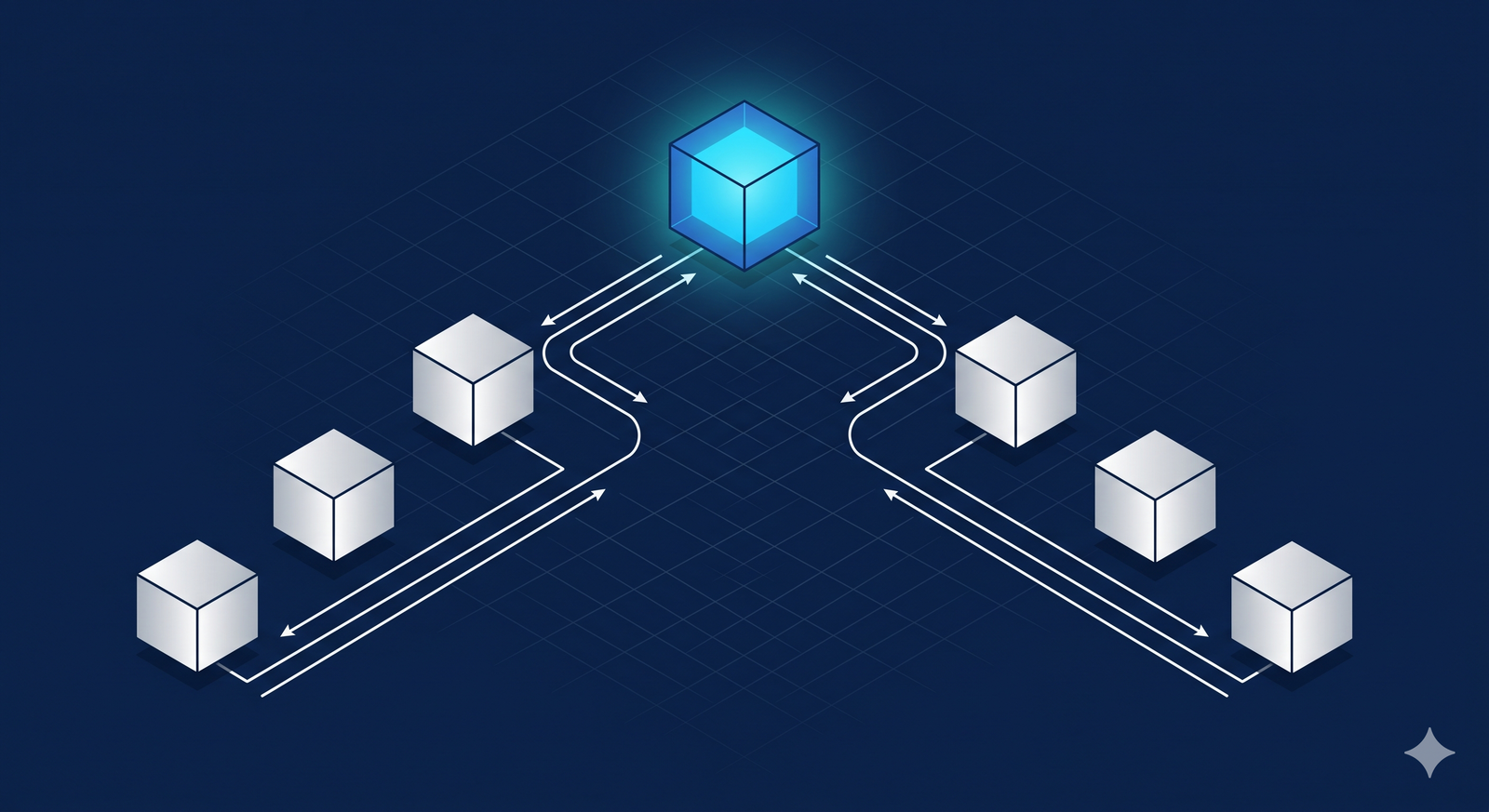
The MECE framework, which stands for Mutually Exclusive and Collectively Exhaustive, is a structural problem-solving method that breaks complex, ambiguous questions into distinct, non-overlapping categories. For data science teams, applying MECE ensures that every variable influencing a business metric is mathematically and logically accounted for without double-counting data. This methodology bridges the gap between vague […]
How to Reduce LLM API Costs for Your Growing SaaS Platform

To reduce LLM API costs for a growing SaaS platform, engineering teams must implement semantic caching to serve repeat queries for free, route simple tasks to cheaper models, and heavily compress prompt context windows. As user volume scales, treating every user request as a zero-shot prompt to a flagship model like GPT-4 or Claude 3.5 […]
Designing Business Rules for AI Agents: Routing Approvals and Flagging Exceptions

To ensure AI agents make safe decisions in enterprise workflows, engineering teams must design deterministic business rules that automatically route high-risk actions to human approvers and flag operational exceptions for manual review. By setting strict confidence thresholds and hardcoded logic gates, companies prevent probabilistic AI models from executing unauthorized or non-compliant tasks. This structured approach […]
How to Set Up an AI Chief of Staff Agent for Executive Teams

The AI Chief of Staff Defined An AI Chief of Staff is a sophisticated, multi-agent software system designed to autonomously manage executive workflows, triage communications, and synthesize data for decision-making. Setting one up requires connecting a Large Language Model (LLM) to your enterprise tools via a framework like LangGraph or CrewAI, implementing a Retrieval-Augmented Generation […]