
Introduction
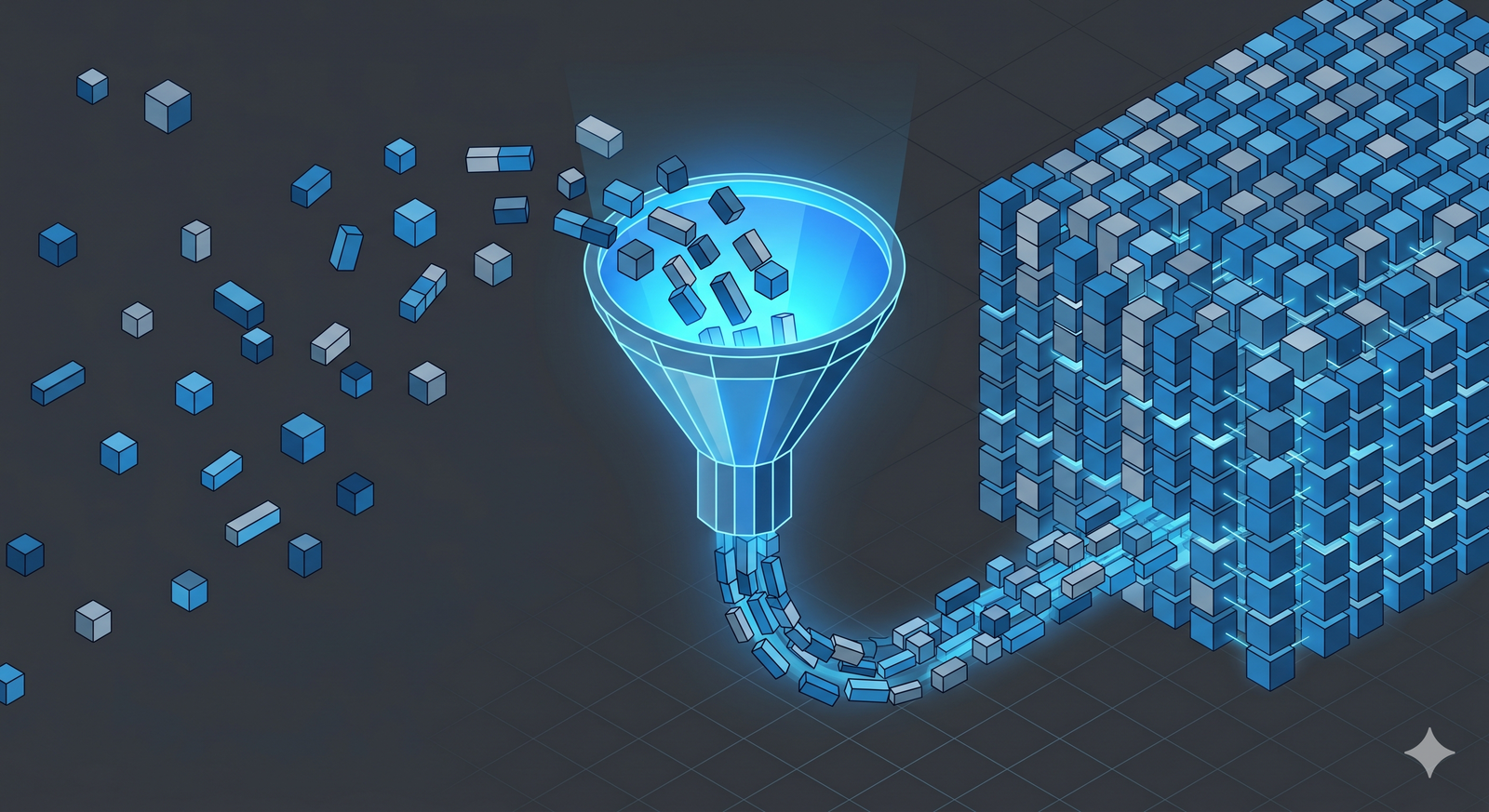
Breaking down organizational data silos for enterprise Large Language Models (LLMs) requires connecting isolated departmental databases into a single, queryable vector index or data fabric. This structural integration allows Retrieval-Augmented Generation (RAG) systems to fetch accurate, company-wide context, preventing AI hallucinations and enabling reliable enterprise automation. If your models only access fragmented data, they will generate incorrect answers based on incomplete information.
The Reality of Disconnected Enterprise Systems
Most companies run on a fractured software ecosystem. The sales department tracks client interactions in a CRM. Human resources stores company policies in a cloud wiki. The finance team manages budgets inside an isolated ERP system. These separate environments create data silos. Information gets trapped within specific departments, rendering it inaccessible to cross-functional teams and automated systems.
When you attempt to deploy generative AI across this fragmented infrastructure, the technology fails to deliver business value. Foundational language models do not possess inherent knowledge of your proprietary business logic. They rely entirely on the text you feed them. If your data infrastructure cannot supply complete and accurate records to the model, the system breaks down.
A recent market analysis by S&P Global found that 41% of organizations cite data silos and poor data architecture as their primary barriers to successful AI implementation. You cannot fix infrastructure problems with better prompting. Technical leaders must prioritize data engineering to ensure seamless integration before deploying natural language interfaces.
Why RAG Systems Expose Infrastructure Flaws
To make an LLM understand your business, engineers use Retrieval-Augmented Generation. RAG acts as a search engine that connects your internal databases to the language model. When an employee asks a question, the RAG pipeline searches company records, extracts relevant text, and sends that text to the LLM to generate a factual answer.
Data silos break this retrieval process. If a developer asks the AI for the latest software deployment protocol, the search algorithm might find an outdated document on a local server. It misses the finalized, secure protocol trapped in a separate compliance database. The system then feeds the outdated document to the LLM. The model confidently outputs wrong instructions.
This is not an AI failure; it is an infrastructure failure. To build reliable natural language processing applications, you must consolidate your unstructured text into a centralized environment.
The Financial Cost of Poor Data Integration
Feeding bad data into an LLM scales existing inefficiencies. If an AI agent drafts a vendor contract using outdated pricing tiers from a siloed database, it creates tangible financial liability.
Gartner reports that poor data quality costs organizations an average of $12.9 million annually. Furthermore, a widely cited study by McKinsey & Company indicates that employees spend nearly 20% of their workweek simply searching for internal information. Building an LLM on top of data silos automates this exact inefficiency. Proper data analytics and infrastructure planning solve the root cause by cleaning and centralizing information prior to model deployment.
Siloed vs AI-Ready Architecture
Understanding the technical differences between legacy storage and modern AI pipelines clarifies your engineering requirements.
| Feature | Legacy Siloed Infrastructure | Unified AI Data Architecture |
| Storage Location | Dispersed across local servers and SaaS apps | Centralized vector databases and data fabrics |
| Retrieval Speed | High latency, manual extraction | Millisecond querying via API |
| Context Quality | Low; files lack cross-departmental links | High; enriched with semantic metadata |
| LLM Performance | High hallucination rate, contradictory answers | Grounded, accurate, and traceable outputs |
| Access Control | Fragmented permissions per application | Centralized role-based access governance |
Step-by-Step Logic to Dismantle Organizational Silos
Transforming disjointed storage into an AI-ready pipeline requires a highly disciplined engineering methodology. You cannot dump raw files into a cloud server and expect an LLM to read them accurately.
Step 1: Audit and Map Existing Systems
Catalog every database, application, and file repository in your company. Document the schema, update frequency, and access permissions for each source. Your engineering team must understand the entire data landscape before writing extraction scripts.
Step 2: Deploy a Data Fabric
Use modern integration tools to connect disparate sources. According to IBM, a data fabric creates a unified access layer that allows engineers to query data across hybrid cloud environments without moving the physical files. This approach accelerates integration and minimizes operational disruption.
Step 3: Standardize Semantic Definitions
Language models rely on metadata to understand business context. Assign consistent definitions to every asset. Ensure that a metric like “annual recurring revenue” means the exact same thing in your finance database as it does in your sales CRM. Inconsistent semantics cause AI models to misinterpret retrieved data.
Step 4: Vectorize Unstructured Information
Convert your PDFs, text documents, and support tickets into vector embeddings. Engineers chunk large documents into smaller paragraphs and process them through a machine learning embedding model. You store these mathematical representations in a vector database, enabling the RAG system to perform rapid similarity searches based on context rather than exact keyword matches.
Step 5: Implement Retrieval Access Controls
An enterprise AI must respect corporate security. Implement strict role-based access controls within the retrieval pipeline. When a user queries the system, the search algorithm must only retrieve files that the specific user has authorization to view.
Handling Visual and Non-Text Data
Enterprise knowledge does not exist solely in text format. Companies store millions of scanned invoices, architectural diagrams, and ID verifications. To feed this information into an LLM, you must convert visual data into machine-readable text.
Deploying computer vision pipelines allows engineers to extract text from scanned PDFs and integrate it into the central vector database. Additionally, you must monitor incoming files for quality and authenticity. Using an AI image detector during the ingestion phase helps filter out synthetic or altered visual files uploaded by third-party vendors, protecting your central knowledge base from data poisoning.
Real-World Case Study: Unifying Supply Chain Data
A mid-sized manufacturing firm experienced severe production delays due to fragmented infrastructure. Their supplier contracts lived in a secure SharePoint drive, their inventory levels sat in an on-premise SQL database, and their shipping schedules were tracked in a cloud-based CRM. When a parts shortage occurred, managers spent hours cross-referencing these three systems.
The firm initiated a custom AI development project to resolve this bottleneck. Their engineers built automated pipelines to extract inventory data, vectorize the contract PDFs, and sync the shipping schedules into a unified cloud repository. They deployed an enterprise LLM interface over this clean dataset.
Managers could then type a plain text query asking how a specific shipping delay impacted their current inventory and which supplier contracts allowed for emergency orders. The RAG pipeline instantly retrieved the relevant clauses from SharePoint, the current stock from SQL, and the timeline from the CRM. The LLM synthesized this data into a clear, actionable summary. Breaking down these silos reduced their incident response time by 60 percent.
The Importance of Upfront Strategy
Connecting disparate systems requires robust backend engineering. Your team must build scalable APIs, manage cloud infrastructure, and establish continuous data monitoring. Pipelines break when source systems change their database schemas. Without automated observability, these silent breaks corrupt your LLM outputs.
Treat data engineering and AI development as interconnected disciplines. A pragmatic AI consulting strategy focuses heavily on data unification and infrastructure modernization long before deploying any language models.
Actionable Next Steps
You can begin preparing your infrastructure today by taking these three concrete actions.
- Inventory your highest-friction data silos. Identify the top three systems your employees struggle to pull reports from, and document the specific APIs required to extract that information.
- Define one narrow AI use case. Choose a specific business problem, such as automating client onboarding, and map the exact data needed to power it. Avoid broad, company-wide chatbot deployments.
- Audit a sample dataset manually. Extract 500 records from your CRM and review them for duplicates, missing fields, and formatting errors. This reveals the scope of your technical debt.
Conclusion
Feeding an enterprise language model requires a foundation of clean, accessible, and unified information. If you ignore legacy data silos, your AI deployments will underperform and generate unnecessary operational risk. If your organization requires expert technical assistance to build robust data pipelines and deploy secure AI architecture, our engineering team can assist you. Visit https://tensour.com/contact to discuss your specific infrastructure needs.
Leave a Reply