
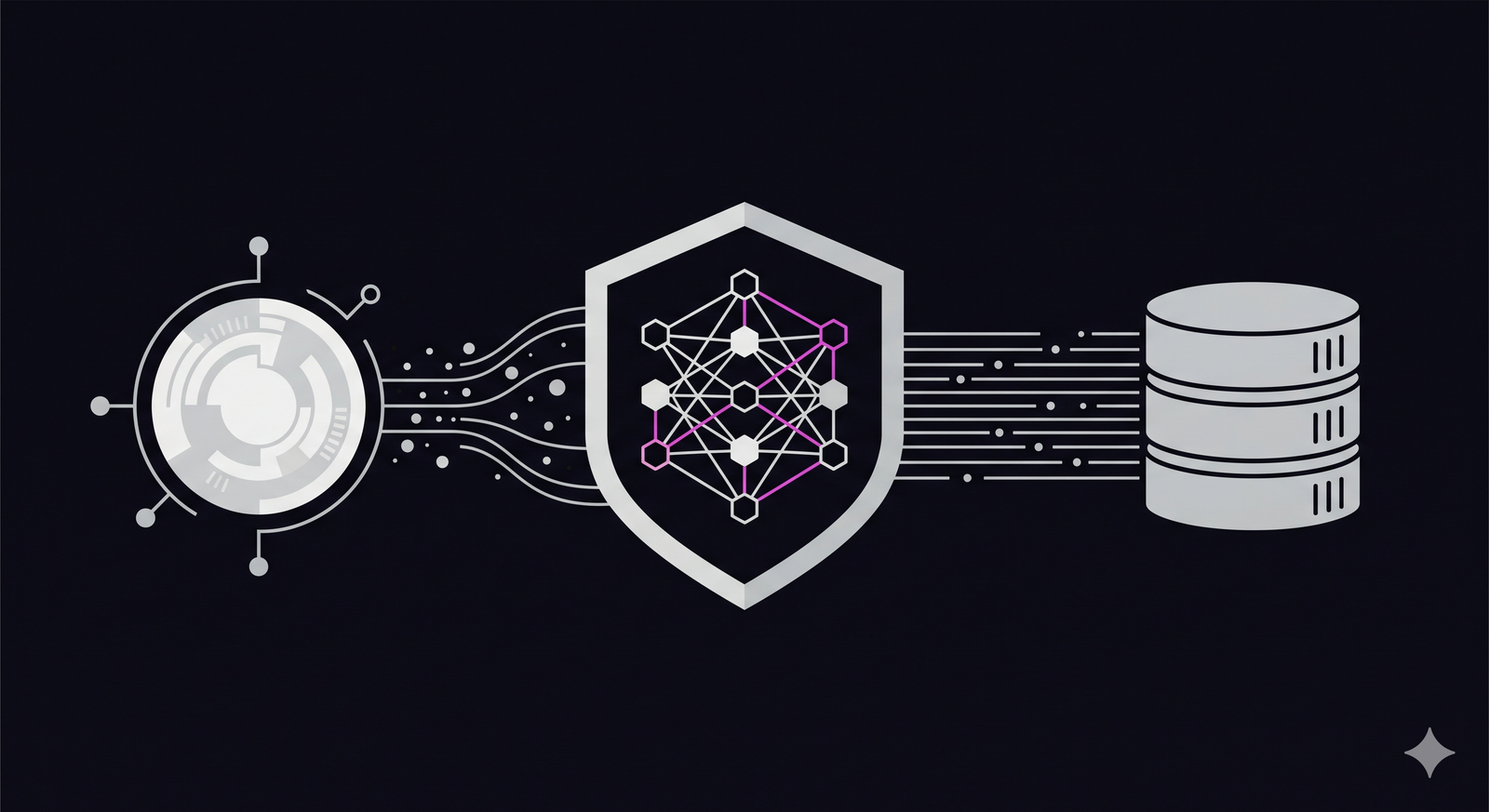
Machine learning architectures for fintech fraud detection utilize real-time data streaming pipelines and ensemble algorithms to instantly identify and block unauthorized transactions. Specifically, these systems analyze thousands of behavioral and financial variables in milliseconds before a payment clears. Consequently, financial institutions can stop complex cybercrime while minimizing payment friction for legitimate customers.
Currently, legacy rule-based systems fail to keep pace with sophisticated financial criminals. According to the Nilson Report, global payment card fraud losses will likely exceed $49 billion by 2030. Therefore, upgrading to dynamic, self-learning infrastructure is no longer optional for modern banking applications.
Furthermore, the financial impact extends far beyond the stolen funds themselves. A recent industry study by LexisNexis reveals that every single dollar of fraud costs United States financial services firms approximately $4.23. This massive total includes manual recovery efforts, regulatory legal fines, and deeply eroded customer trust.
Therefore, engineering robust machine learning infrastructure fundamentally protects your entire corporate balance sheet. Modern artificial intelligence does not just save money; it actively secures your core product offering. We will explore the exact technical architecture required to build a modern fraud engine.
Step 1 Designing the Real Time Data Ingestion Pipeline
The foundation of any successful fraud detection system is its highly optimized data streaming architecture. You cannot wait for overnight batch processing to catch a stolen credit card transaction. Therefore, your system must seamlessly ingest, process, and analyze transaction payloads in less than fifty milliseconds.
Typically, data engineers deploy distributed event streaming platforms like Apache Kafka or Amazon Kinesis to handle this massive transaction throughput. These tools decouple the incoming transaction data from the downstream analytical engines. Subsequently, this specific decoupling allows multiple microservices to consume the data simultaneously without ever slowing down the primary payment gateway.
Once the raw data enters the stream, stream processing frameworks like Apache Flink or Spark Streaming take over immediately. These advanced frameworks calculate running mathematical aggregations instantly. If you need help setting up these high-throughput pipelines safely, our data analytics services can build the exact infrastructure required.
Step 2 Building a Low Latency Feature Store
Raw transaction data alone rarely provides enough contextual evidence to detect sophisticated fraud attempts. Therefore, you must enrich this raw data with deep historical and behavioral metrics instantly. This is exactly where a centralized operational feature store becomes technically indispensable for your engineering team.
A modern feature store calculates and serves critical data points, such as a user’s transaction velocity over the last sixty minutes. Furthermore, it meticulously tracks geolocation mismatches, IP address hopping, and device fingerprint anomalies. By pre-calculating these metrics asynchronously, the feature store serves them to the machine learning model in single-digit milliseconds.
Consequently, the inference model does not waste precious time querying a slow relational database during a live customer transaction. It simply grabs the pre-computed behavioral features directly from an in-memory cache like Redis. Ultimately, this specific architecture drastically reduces inference latency and ensures a completely seamless customer checkout experience.
Step 3 Selecting the Optimal Machine Learning Models
Choosing the right predictive algorithm requires balancing pure predictive accuracy with strict execution speed. Currently, tree-based ensemble models thoroughly dominate the financial technology sector for fraud prevention. Specifically, algorithms like XGBoost and LightGBM provide truly exceptional performance on highly structured, tabular financial data.
These specific models build hundreds of shallow decision trees sequentially, carefully correcting the mathematical errors of previous trees. Consequently, they capture highly complex, non-linear relationships between abstract variables like transaction amount, merchant category, and time of day. They also execute incredibly fast, making them practically ideal for real-time payment authorization constraints.
However, for highly complex pattern recognition tasks, you might carefully integrate deep neural networks into the pipeline. Recurrent Neural Networks naturally analyze the sequential sequence of user clicks during an active web banking session. If you are designing a completely bespoke algorithmic solution, our custom AI development team can engineer these hybrid architectures efficiently.
Step 4 Deploying Graph Neural Networks for Fraud Rings
Modern financial fraud rarely operates as simple, isolated incidents of stolen credit cards. Instead, highly organized crime rings use vast networks of synthetic identities and compromised mule accounts to launder stolen money. Standard machine learning models often miss these coordinated attacks entirely because they evaluate every single transaction in isolation.
Therefore, leading fintech companies now actively deploy Graph Neural Networks (GNNs) to combat organized syndicates. Graph databases map the complex, invisible web of relationships existing between users, mobile devices, IP addresses, and routing numbers. Subsequently, the GNN mathematically analyzes the shape and density of these connections to spot deeply hidden suspicious clusters.
For example, if twenty seemingly unconnected different accounts suddenly transfer funds to a single unknown overseas node, the GNN flags the network anomaly immediately. This structural network analysis provides a massive operational advantage over traditional tabular data models. Implementing this complex topology requires specialized AI consulting and strategy to map the data schemas correctly.
Step 5 Implementing MLOps for Concept Drift
Fraudulent tactics evolve constantly as criminals probe financial defenses for new technical weaknesses. This rapid behavioral shift causes a phenomenon known as concept drift, where a previously accurate model suddenly begins failing. Therefore, a static machine learning model deployed once will degrade significantly within just a few weeks.
To prevent this silent failure, you must build robust Machine Learning Operations (MLOps) pipelines. These pipelines continuously monitor the model’s live production metrics against baseline training expectations. Consequently, if the system detects an unexpected spike in approved fraudulent transactions, it immediately triggers an automated retraining sequence.
This continuous integration loop ensures your fraud detection system adapts to newly discovered threat vectors automatically. Furthermore, it safely deploys the newly trained model via careful shadow testing before routing live traffic. This rigorous operational discipline prevents bad model updates from accidentally blocking legitimate retail customers.
Summary Table Traditional vs Machine Learning Architectures
To clearly illustrate the massive technical shift occurring in fintech, review this detailed structural comparison. It highlights exactly why legacy systems are failing aggressively in modern financial environments.
| Feature | Legacy Rule Based Systems | Modern Machine Learning Architectures |
| Decision Engine | Static IF-THEN hardcoded rules | Dynamic probabilistic and ensemble models |
| Adaptability | Requires slow manual developer coding | Learns from newly ingested data automatically |
| Data Utilization | Limited variables (typically 5-10) | Massive feature sets (1000+ variables) |
| False Positives | Extremely high and frustrating | Significantly reduced through contextual scoring |
| Network Analysis | None available | Deep graph relationship mapping capabilities |
Case Study Reducing False Positives in Neo Banking
False positives occur when a security system incorrectly blocks a perfectly legitimate customer’s financial transaction. According to research from McKinsey & Company, excessive false positives actively destroy customer loyalty and directly reduce top-line banking revenue. A prominent European neo-bank recently faced this exact existential crisis.
Their legacy rule-based firewall system blocked nearly 15% of all cross-border debit transactions automatically. Consequently, their customer support phone lines were completely overwhelmed with deeply angry users traveling abroad. They desperately needed to upgrade their decision engine without exposing the bank’s core assets to actual risk.
The engineering team replaced the static geographic rules with an XGBoost ensemble model connected directly to a real-time feature store. This newly engineered architecture comprehensively analyzed the user’s historical travel patterns alongside current device biometrics. Within just three months, the machine learning system reduced false positives by an astonishing 60% while simultaneously catching 22% more actual fraud.
Securing the Onboarding Process with Advanced AI
Fraud prevention must absolutely begin before a malicious user even creates a new bank account. Criminals frequently use stolen physical documents or sophisticated deepfake videos to bypass initial Know Your Customer (KYC) regulations. Therefore, integrating deep visual analysis into your onboarding architecture remains critically crucial.
By utilizing an advanced AI image detector, fintech applications can instantly flag forged digital passports or digitally altered driver’s licenses. Furthermore, highly specialized computer vision models can perform live biometric liveness checks during the mandatory selfie verification step.
Additionally, analyzing the raw text in customer support chats can regularly reveal ongoing social engineering attempts. Deploying precise NLP algorithms allows your system to detect aggressive or highly manipulative language patterns commonly used in account takeover schemes. Together, these integrated analytical layers create a highly secure, multi-modal institutional defense system.
Explainability and Regulatory Compliance
Financial institutions operate under strict regulatory scrutiny worldwide. Therefore, you cannot simply deploy a black-box neural network to decline user transactions without providing a clear reason. Regulators legally require banks to explain exactly why a specific financial decision occurred.
To solve this compliance hurdle, engineers implement Explainable AI (XAI) frameworks like SHAP (SHapley Additive exPlanations). These mathematical frameworks calculate exactly how much each individual data feature contributed to the final fraud score. Consequently, if an auditor questions a blocked transaction, the bank can produce a mathematically sound, human-readable report.
This vital transparency completely bridges the gap between advanced data science capabilities and strict legal compliance. It safely allows risk officers to trust the automated systems running their daily operations.
3 Actionable Steps You Can Take Today
- Audit your current transaction latency immediately. Ensure your basic data ingestion pipeline actually operates fast enough to support real-time model inference without visibly degrading the final user checkout experience.
- Transition away from static rules into a shadow model testing environment safely. Run a newly developed machine learning model silently alongside your current rules to compare baseline performance metrics before fully deploying it.
- Implement a centralized operational feature store for your internal data science team. This specific architectural upgrade immediately solves the painful discrepancy between offline model training data and live online production data.
Conclusion
Building a modern machine learning architecture for fintech fraud detection requires highly precise data engineering and strictly optimized algorithms. By actively adopting real-time streaming pipelines, ensemble models, and deep graph networks, you can securely protect your platform while drastically improving the legitimate customer experience. If you need custom help carefully implementing this complex architecture into your production environment, our AI and Data Science agency can assist you directly at https://tensour.com/contact.
Leave a Reply